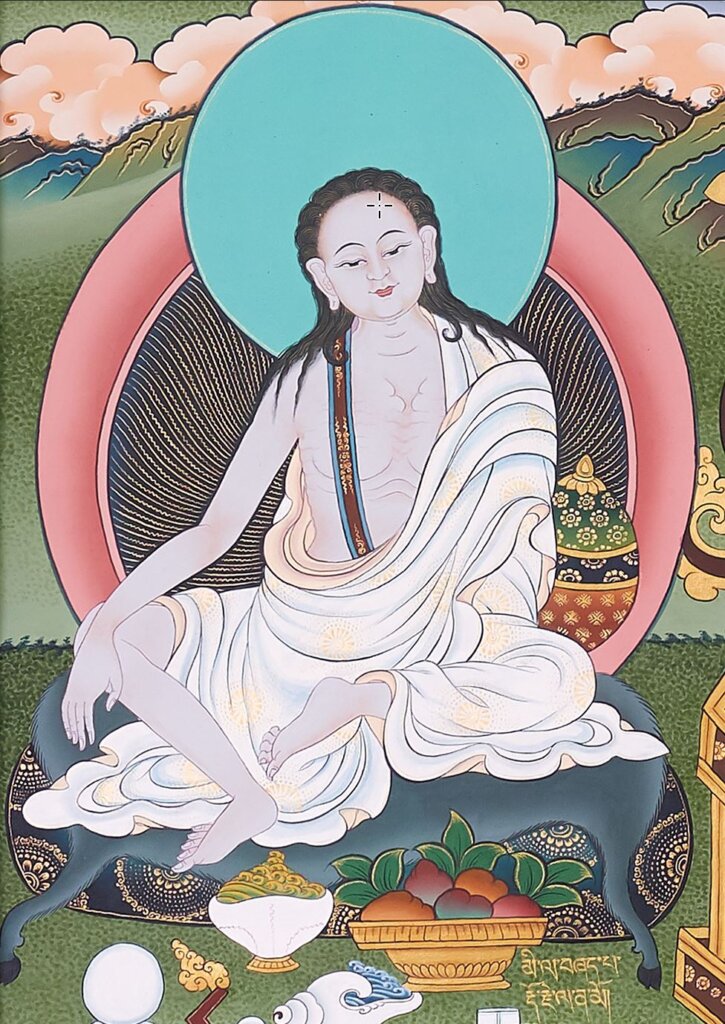
Milarepa's poignant observation, "What is gathered will scatter," invites us to reflect on the transient nature of existence. This statement encapsulates a profound truth about the impermanence that permeates our lives. In a world where we often cling to possessions, relationships, and even ideas, Milarepa reminds us that everything we gather—be it material wealth or emotional attachments—will ultimately disperse. Understanding this principle is crucial, as it encourages us to embrace the fluidity of life rather than resist it.
At its core, this quote speaks to the heart of Buddhist philosophy, where the concepts of impermanence and non-attachment are central. Milarepa, a revered figure in Tibetan Buddhism, experienced the depths of suffering and the heights of enlightenment, making his insights particularly resonant. By acknowledging the inevitability of scattering, we are invited to cultivate a sense of freedom and acceptance, allowing us to navigate life’s uncertainties with grace and wisdom.
The image / the metaphor
The imagery in Milarepa's quote evokes a vivid sense of movement and change. The act of gathering suggests a conscious effort to accumulate, to bring together what we perceive as valuable or meaningful. In contrast, the word "scatter" conveys a sense of loss or disbandment, hinting at the unpredictability of life. This juxtaposition of gathering and scattering creates a dynamic tension, inviting us to consider the dual nature of our experiences—how we seek to hold on to what we cherish, only to face the reality that all things are subject to change.
Diving deeper into the metaphor, we can see that gathering often represents our desires and aspirations, while scattering reflects the inherent instability of those very pursuits. This duality serves as a reminder that our attachments, though they may bring temporary joy, are ultimately fleeting. The metaphor encourages us to cultivate a mindset of openness and acceptance, recognizing that the beauty of life lies not in clinging to what we gather but in embracing the natural ebb and flow of existence.
In the speaker's tradition
Milarepa's teachings are deeply rooted in the Buddhist tradition, where the concepts of impermanence (anicca) and non-attachment are foundational. In Buddhism, understanding the transient nature of all things is essential for spiritual growth. The practice of letting go, or kenosis, aligns closely with Milarepa's message, as it encourages practitioners to release their attachments and embrace the present moment. This perspective is echoed in the notion of sunyata, or emptiness, which suggests that all phenomena are devoid of inherent existence, further reinforcing the idea that what we gather is ultimately illusory.
In the context of Milarepa's life, his journey from a life of suffering to one of enlightenment exemplifies this teaching. His songs, as recorded in the "Songs of Milarepa," reflect the struggles of attachment and the liberation found in letting go. One can draw parallels to the teachings found in the Heart Sutra, which emphasizes the emptiness of all forms and the liberation that arises from this understanding. Both texts invite us to confront the nature of our attachments and to find freedom in the acceptance of impermanence.
Living the teaching
Consider a modern scenario where the teaching of gathering and scattering resonates profoundly: the experience of moving to a new city. As one gathers belongings, memories, and hopes for a fresh start, there is an inherent excitement mixed with anxiety. The act of packing symbolizes a desire to hold onto the past, yet the reality of relocation often leads to the scattering of those very attachments. This transition serves as a poignant reminder that while we may gather experiences and relationships, the act of moving forward necessitates a release, allowing us to embrace new opportunities and connections.
In the realm of relationships, Milarepa's teaching can be particularly illuminating. Imagine a friendship that has evolved over the years, filled with shared laughter and support. However, as life unfolds, paths may diverge, leading to a natural scattering of the bond. This moment can evoke feelings of loss, yet it also presents an opportunity for growth and self-discovery. By recognizing that relationships, like all things, are impermanent, we can learn to cherish the moments shared without clinging to the past, allowing both ourselves and others the freedom to evolve.
A reflection
As we contemplate Milarepa's wisdom, we are invited to consider the nature of our own attachments. What are the things we gather in our lives, and how do they shape our sense of self? In recognizing that what we hold dear is subject to change, we can cultivate a deeper appreciation for the present moment. How might embracing the scattering of our attachments lead to a more profound sense of freedom and connection in our lives?
