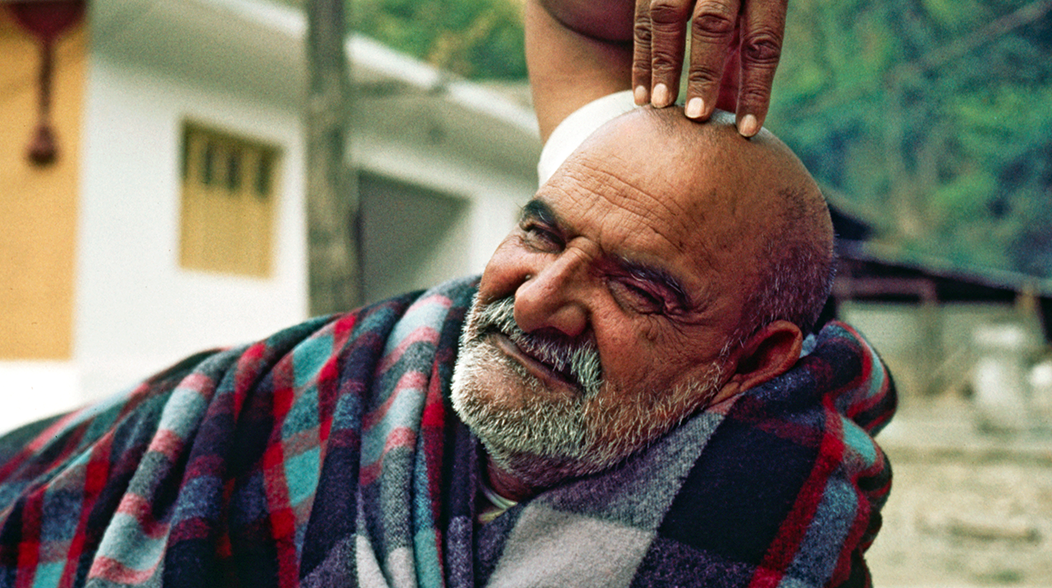
“Be a beggar at God's door.” This profound statement by Neem Karoli Baba invites us to adopt a posture of humility and surrender in our relationship with the divine. It suggests that true spiritual wealth comes not from material possessions or self-sufficiency, but from recognizing our inherent need for grace and connection with the divine. In a world that often values independence and self-reliance, this teaching challenges us to reconsider what it means to be spiritually rich.
At its core, this quote encapsulates the essence of bhakti, the devotional path that emphasizes love and surrender to God. By positioning ourselves as beggars, we acknowledge our vulnerability and our dependence on a higher power. This act of humility is not a sign of weakness; rather, it is an invitation to open our hearts and minds to the abundance of love and support that the universe offers. In doing so, we align ourselves with a deeper truth that transcends the ego and connects us to the divine source of all existence.
The image / the metaphor
The imagery of being a beggar at God's door evokes a sense of longing and desire for connection. It conjures the image of someone humbly kneeling, hands outstretched, waiting for the grace that only the divine can provide. The verb "be" suggests a state of being rather than doing, emphasizing that this is not merely an action but a way of life. The door symbolizes access to the divine, a threshold that separates the mundane from the sacred, inviting us to step beyond our limitations and into a realm of infinite possibility.
Diving deeper into the metaphor, we can see that being a beggar signifies a relinquishing of pride and self-sufficiency. It is a call to let go of the illusion of control and to embrace the reality of our dependence on something greater than ourselves. In this state of humility, we become open vessels for divine grace, allowing love and wisdom to flow into our lives. This act of surrender is transformative, as it shifts our focus from what we lack to the abundance that is already present in our lives.
In the speaker's tradition
Neem Karoli Baba's teachings are deeply rooted in the tradition of bhakti, which emphasizes devotion and love for God as the highest spiritual practice. In this context, being a beggar at God's door aligns with the concept of kenosis, or self-emptying, where one relinquishes the ego and opens oneself to divine presence. This humility is essential for cultivating a genuine relationship with the divine, as it allows us to transcend our limited perceptions and experience the fullness of existence.
Furthermore, this teaching resonates with the idea of sunyata, or emptiness, found in various spiritual traditions. By recognizing our own emptiness, we can approach the divine with an open heart, free from the burdens of attachment and expectation. In the Bhagavad Gita, Krishna speaks of surrendering to God as the ultimate path to liberation, echoing the sentiment of Neem Karoli Baba's quote. This surrender is not a passive act but an active engagement with the divine, where we seek to align our will with the greater cosmic order.
Living the teaching
Consider a modern scenario where this teaching can be applied: a person facing a significant life challenge, such as the loss of a job or the end of a relationship. In such moments, the instinct may be to retreat into self-reliance, to muster strength and face the world alone. However, embracing the role of a beggar at God's door invites this individual to seek support and guidance from a higher power. By acknowledging their vulnerability and opening themselves to divine assistance, they may find unexpected resources and connections that help them navigate their difficulties.
This teaching can also be applied in the context of relationships. Imagine a situation where two friends are experiencing a conflict. Instead of clinging to pride and the need to be right, one friend might choose to approach the other with humility, recognizing their own shortcomings and the need for reconciliation. By embodying the spirit of a beggar, they create space for healing and understanding, allowing love to flow back into the relationship. This practice of humility fosters deeper connections and enriches our interactions with others.
A reflection
As we contemplate the wisdom of Neem Karoli Baba's quote, we are invited to reflect on our own lives: In what areas do we cling to pride or self-sufficiency, and how might we benefit from adopting a posture of humility? This question encourages us to explore the ways in which we can open ourselves to divine grace and support, allowing love and connection to flourish in our lives. By embracing the role of a beggar at God's door, we may discover a profound sense of belonging and purpose that transcends our individual struggles.