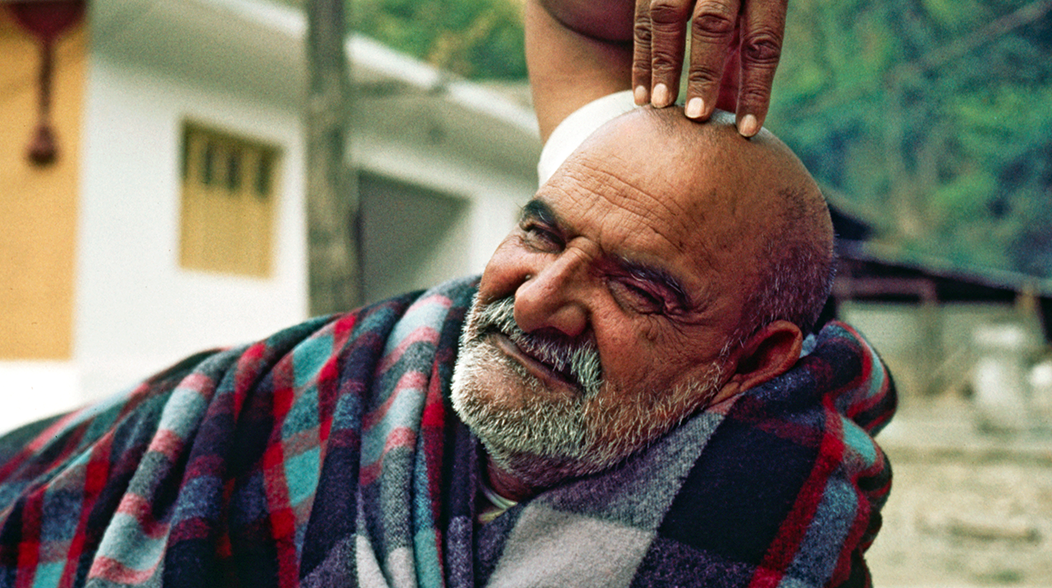
Neem Karoli Baba's profound assertion, "The whole world is your family," invites us to expand our understanding of kinship beyond the confines of blood relations and immediate social circles. This statement challenges us to recognize the interconnectedness of all beings, urging us to cultivate a sense of belonging that transcends geographical, cultural, and ideological boundaries. In a time marked by division and isolation, this teaching serves as a vital reminder of our shared humanity and the potential for love and compassion to unite us.
At its core, this quote beckons us to reconsider the nature of family itself. Traditionally, family is often defined by lineage or proximity, yet Neem Karoli Baba encourages us to embrace a more expansive definition—one that encompasses every individual we encounter. This perspective not only fosters a sense of unity but also invites us to engage with the world around us in a more meaningful and compassionate way. By recognizing the world as our family, we open ourselves to a deeper understanding of love, empathy, and responsibility toward one another.
The image / the metaphor
The imagery in Neem Karoli Baba's quote evokes a sense of warmth and inclusivity. The phrase "the whole world" suggests a vast, encompassing space, while "your family" conveys intimacy and connection. The juxtaposition of these two ideas creates a powerful metaphor that invites us to see beyond our immediate circles and recognize the inherent bonds that tie us to all of humanity. It evokes feelings of belonging and responsibility, urging us to act with kindness and compassion toward others, as we would for our own family members.
In the speaker's tradition
Neem Karoli Baba's teachings are deeply rooted in the bhakti tradition, which emphasizes devotion and love for the divine as a pathway to spiritual realization. Central to this tradition is the concept of unity, or oneness, which posits that all beings are manifestations of the same divine essence. This understanding aligns with the idea of "fana," or annihilation of the self in the love of God, where the boundaries of individuality dissolve, allowing us to experience the interconnectedness of all life. In this context, recognizing the world as family becomes a spiritual practice that fosters compassion and devotion.
Furthermore, the notion of "dharma," or righteous duty, plays a crucial role in this teaching. By viewing the world as our family, we are called to act in ways that honor our interconnectedness and fulfill our responsibilities toward others. This perspective resonates with the teachings found in texts such as the Bhagavad Gita, where the importance of selfless action and devotion to the greater good is emphasized. In this light, Neem Karoli Baba's quote serves as a guiding principle for living a life rooted in love, compassion, and service.
Living the teaching
In our modern lives, the teaching that "the whole world is your family" can manifest in various ways. Consider a scenario where we encounter a stranger in need—perhaps someone struggling with their groceries or a homeless individual seeking assistance. In these moments, the invitation to see them as family can transform our response from indifference or discomfort to one of empathy and action. By recognizing their humanity and our shared existence, we can extend a helping hand, fostering a sense of connection that transcends societal barriers.
Additionally, this teaching can be applied within our personal relationships, especially during challenging moments. Imagine a disagreement with a loved one, where feelings of frustration and anger may arise. By remembering that this person is part of our larger family, we can approach the situation with compassion and understanding, seeking resolution rather than conflict. This shift in perspective allows us to navigate difficulties with grace, reinforcing the bonds of love and connection that unite us.
A reflection
As we contemplate Neem Karoli Baba's profound statement, we are invited to reflect on our own perceptions of family and connection. How might our lives change if we embraced the idea that the entire world is our family? In what ways can we cultivate a deeper sense of belonging and responsibility toward others? These questions encourage us to explore the transformative power of love and compassion, inviting us to live in a manner that honors our shared humanity.