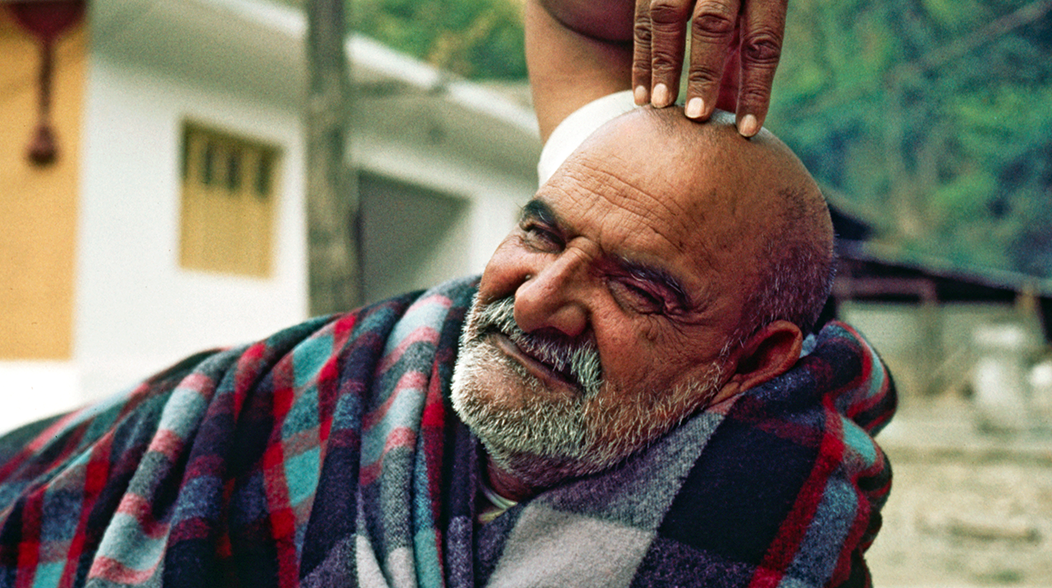
Neem Karoli Baba, affectionately known as Maharaj-ji, invites us to explore a profound truth with his assertion: "To trust Maharaj-ji is to trust your own heart." This statement encapsulates the essence of bhakti, or devotional love, suggesting that the relationship we cultivate with our spiritual guide is intrinsically linked to the trust we place in our own inner wisdom. In a world often filled with doubt and external noise, this teaching beckons us to turn inward, to recognize that the heart is not merely a vessel of emotion but a compass guiding us toward authenticity and connection.
At its core, this quote challenges us to examine the nature of trust itself. Trust is not a passive state; it is an active engagement with our deepest selves. When we trust Maharaj-ji, we are not simply placing our faith in an external figure; we are affirming our own capacity to discern truth and love. This relationship between the guru and the disciple is a sacred dance, where the heart becomes the bridge that connects the two, allowing for a profound exchange of wisdom and grace. In this light, the quote serves as both a reminder and an invitation to cultivate a deeper relationship with our own hearts.
The image / the metaphor
The imagery within the quote evokes a sense of intimacy and vulnerability. To "trust" implies a surrender, a willingness to let go of preconceived notions and fears. The act of trusting Maharaj-ji is not merely about belief; it is an invitation to open oneself to the flow of divine love that permeates our existence. The heart, often seen as the seat of emotion, is elevated here to a position of authority, suggesting that our true guidance lies not in the intellect or external validation but in the quiet whispers of our innermost being.
In the speaker's tradition
Neem Karoli Baba's teachings are deeply rooted in the tradition of bhakti, which emphasizes devotion and love as pathways to spiritual realization. In this context, trust becomes a vital component of the disciple's journey. The concept of bhakti encourages us to surrender our ego and open ourselves to the divine, recognizing that the guru serves as a mirror reflecting our own potential for love and wisdom. This relationship is not merely transactional; it is a sacred bond that fosters growth and transformation, inviting us to embrace our true nature.
In the Bhagavad Gita, a foundational text in the bhakti tradition, Lord Krishna speaks of surrendering to the divine will as a means of attaining liberation. This resonates with Maharaj-ji's message, as trusting the guru is akin to surrendering to the heart's wisdom. The Gita teaches that through devotion and trust, we can transcend the limitations of the ego and experience the fullness of our being. In this light, the quote serves as a reminder that our journey toward self-realization is intimately connected to our capacity to trust both the guru and our own hearts.
Living the teaching
Consider a modern scenario where this teaching might resonate: a person grappling with a significant life decision, perhaps a career change or a relationship challenge. In such moments, the external world often bombards us with opinions and expectations, leading to confusion and self-doubt. By embracing the teaching of trusting Maharaj-ji, this individual can turn inward, seeking the guidance of their heart. This process may involve quiet reflection, meditation, or simply allowing space for intuition to emerge, ultimately leading to a decision that feels authentic and aligned with their true self.
In another context, imagine a relationship that has become strained, filled with misunderstandings and unmet expectations. Here, trusting one's heart can be transformative. Instead of reacting from a place of hurt or frustration, one might pause to listen to the heart's wisdom, which often calls for compassion, understanding, and vulnerability. By embodying the trust that Maharaj-ji speaks of, individuals can approach their relationships with a renewed sense of openness, fostering deeper connections and healing. This practice of trust becomes a daily commitment, a way of life that honors both the self and others.
A reflection
As we contemplate the depth of Maharaj-ji's words, we are invited to ask ourselves: How can I cultivate a deeper trust in my own heart? This question encourages us to explore the ways in which we might be holding back from fully embracing our inner wisdom. In a world that often prioritizes external validation, this reflection serves as a gentle reminder to turn inward, to listen, and to trust the guidance that arises from within. In doing so, we honor not only our own journey but also the sacred connection we share with the divine.