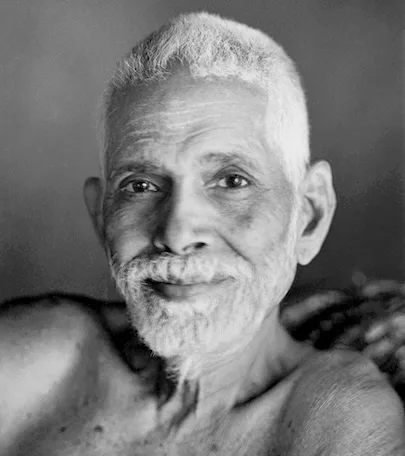
In the words of Ramana Maharshi, "What is essential in any sadhana is to try to bring back the running mind and fix it on one thing only." This profound statement invites us to consider the nature of our minds, which often flit from thought to thought like butterflies in a garden. The stakes are high; in a world filled with distractions, the ability to focus our attention becomes a sacred practice, essential for spiritual growth and self-realization. By honing our focus, we can cultivate a deeper connection to our true selves and the divine.
To deepen our understanding, we must recognize that the term "sadhana" refers to a disciplined spiritual practice aimed at achieving a specific goal, often enlightenment or self-realization. Maharshi's emphasis on bringing the "running mind" back to a singular focus highlights the struggle many face in their spiritual journeys. It is not merely about concentration; it is about redirecting our scattered energies toward a unified purpose, allowing us to transcend the chaos of our thoughts and experience a profound stillness within.
The image / the metaphor
The imagery in Maharshi's quote evokes a vivid picture of a mind in constant motion, akin to a river rushing over rocks, turbulent and unyielding. The verb "bring back" suggests an active engagement, a gentle yet firm effort to redirect our attention. This act of fixing the mind on "one thing only" implies a return to a state of clarity and purpose, where distractions fade away, and the essence of our being can emerge. It is a call to cultivate a sense of inner peace amidst the noise of life.
Diving deeper into this metaphor, we can see that the "running mind" represents not just distraction but also the myriad of thoughts and emotions that can lead us astray from our true path. The act of fixing our attention is akin to a gardener tending to a wild garden, pruning away the overgrowth to reveal the beauty that lies beneath. In this sense, the practice of focus becomes a transformative journey, allowing us to cultivate a fertile ground for spiritual growth and self-discovery.
In the speaker's tradition
Ramana Maharshi's teachings are deeply rooted in the Hindu tradition, particularly in the concepts of self-inquiry and the realization of the Self (Atman). The practice of sadhana is often intertwined with the pursuit of dharma, or righteous living, which requires clarity of mind and purpose. In this context, the act of focusing the mind can be seen as a form of bhakti, or devotion, where the practitioner dedicates their attention to the divine, ultimately leading to a state of union with the source of all existence.
Moreover, Maharshi's emphasis on focus resonates with the teachings found in the Bhagavad Gita, where Lord Krishna advises Arjuna to concentrate on his duty without attachment to the results. This notion of single-mindedness is echoed in the concept of prajna, or wisdom, which arises when the mind is free from distractions and aligned with a higher purpose. In this way, Maharshi's quote serves as a reminder of the timeless wisdom embedded in the spiritual texts of the Hindu tradition.
Living the teaching
Consider a modern scenario where this teaching can take root: a busy professional juggling multiple tasks, deadlines, and responsibilities. In the midst of this chaos, the individual finds it challenging to concentrate on any one task, leading to feelings of overwhelm and frustration. By applying Maharshi's teaching, they can consciously choose to set aside distractions—turning off notifications, creating a dedicated workspace, and committing to focused work sessions. This practice not only enhances productivity but also fosters a sense of accomplishment and inner peace.
Another application of this teaching can be found in personal relationships. Imagine a moment of conflict where emotions run high, and communication breaks down. By bringing the "running mind" back to a singular focus—perhaps the intention to understand and empathize with the other person—individuals can navigate the conversation with greater clarity and compassion. This shift in focus transforms the interaction from one of discord to one of connection, allowing for healing and deeper understanding.
A reflection
As we contemplate Maharshi's words, we are invited to reflect on our own lives: What is the one thing that deserves our undivided attention? In a world filled with distractions, how can we cultivate the discipline to bring our minds back to that essential focus? This inquiry not only challenges us to prioritize our spiritual practice but also encourages us to seek clarity in our daily lives, ultimately guiding us toward a deeper connection with ourselves and the universe.