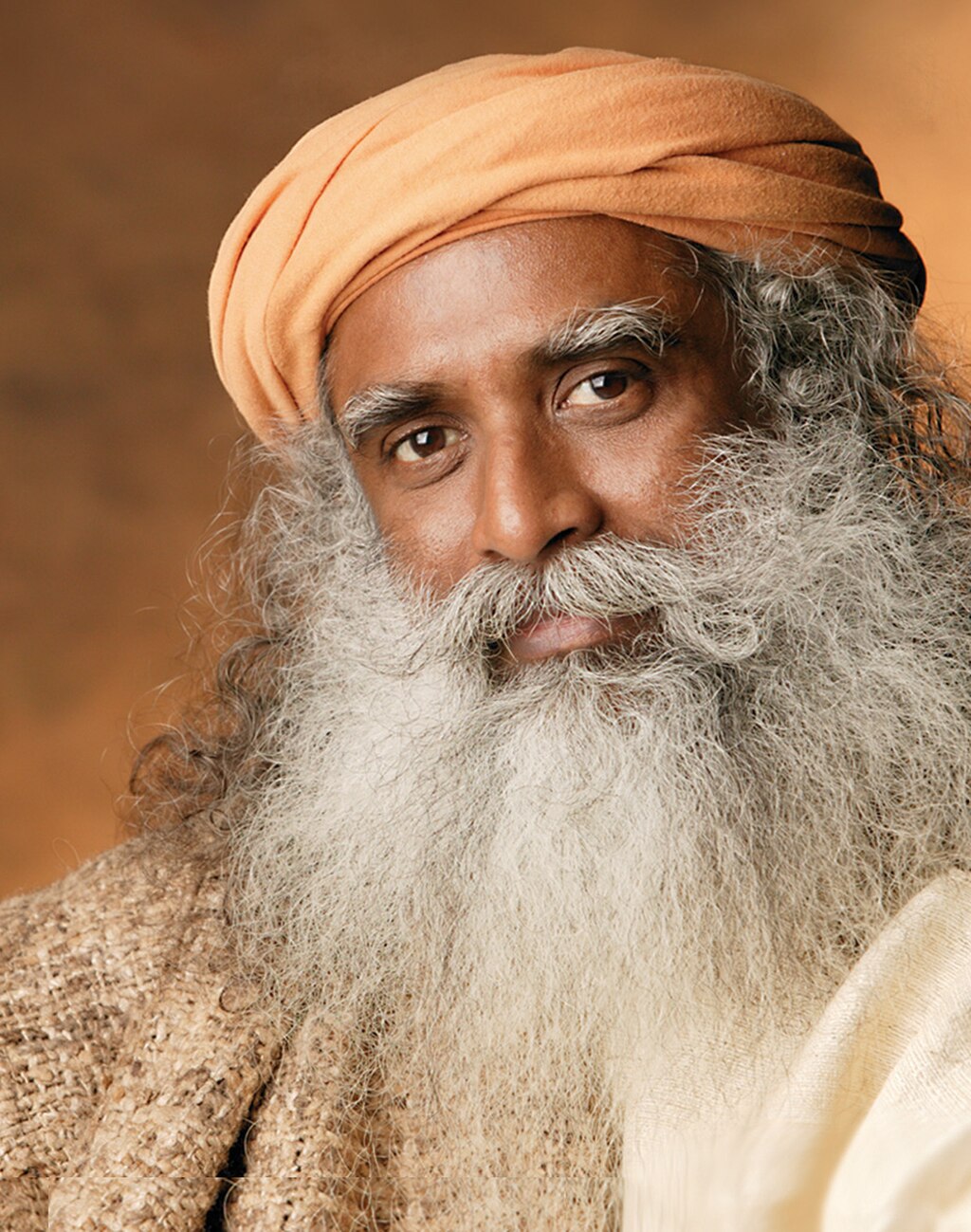
The Path to Joy: Embracing Spiritual Freedom
Sadhguru's assertion that "If you have to live joyfully, freely, the only way out is to become spiritual. There is no other way," invites us to explore the profound connection between spirituality and the experience of joy and freedom. This statement suggests that true liberation and happiness cannot be found in external circumstances or material pursuits; rather, they arise from an inner transformation. In a world often dominated by distractions and superficial pleasures, understanding this quote becomes essential for anyone seeking a deeper, more fulfilling existence.
To delve deeper, we must recognize that Sadhguru's words challenge us to reconsider our definitions of joy and freedom. They compel us to look beyond fleeting moments of happiness and to seek a more enduring state of being. This journey towards spiritual awakening is not merely a personal endeavor; it is a collective call to cultivate a consciousness that transcends the limitations of the ego and societal expectations. In this light, the quote serves as a guiding beacon, illuminating the path toward a life imbued with authentic joy and profound freedom.
The image / the metaphor
The imagery in Sadhguru's quote evokes a sense of urgency and necessity. The phrase "the only way out" suggests that the path to joy and freedom is not just a choice but an imperative. The verbs "live joyfully" and "freely" imply an active engagement with life, one that requires us to transcend our habitual patterns and embrace a more expansive way of being. This call to action resonates deeply, as it emphasizes that joy and freedom are not passive states but dynamic experiences that demand our participation.
Diving deeper into the metaphor, we can see that Sadhguru is inviting us to consider spirituality as a transformative journey. The notion of becoming spiritual implies a shedding of layers—of conditioning, fear, and limitation—that bind us. It suggests that true joy and freedom are not merely states to be attained but are inherent qualities of our being that can be uncovered through spiritual practice. This journey is akin to a caterpillar's metamorphosis into a butterfly, where the struggle to break free from the cocoon ultimately leads to the liberation of the soul.
In the speaker's tradition
Sadhguru's teachings are deeply rooted in the ancient tradition of yoga, which emphasizes the union of body, mind, and spirit. In this context, the concepts of dharma and prajna come into play, as they guide individuals toward living in alignment with their true nature and cultivating wisdom. The idea of kenosis, or self-emptying, resonates with Sadhguru's assertion, as it encourages us to let go of our attachments and ego-driven desires in order to experience the fullness of life. This spiritual journey is not merely about personal gain but about realizing our interconnectedness with all beings.
In the Yoga Sutras of Patanjali, we find a parallel to Sadhguru's message. The sutras speak of the importance of inner stillness and self-awareness as prerequisites for experiencing true joy and liberation. The practice of meditation, as outlined in these ancient texts, serves as a tool for cultivating the inner landscape necessary for spiritual growth. Just as Sadhguru emphasizes the need for a spiritual approach to joy, Patanjali reminds us that the path to freedom is paved with self-discovery and inner transformation.
Living the teaching
Consider a modern scenario where this teaching can be applied: imagine someone caught in the relentless cycle of work and social obligations, feeling increasingly drained and unfulfilled. In such a situation, Sadhguru's message serves as a wake-up call. By prioritizing spiritual practices—such as meditation, mindfulness, or yoga—this individual can begin to shift their focus from external validation to inner fulfillment. As they cultivate a deeper connection with themselves, they may discover that joy and freedom are not contingent upon their circumstances but are inherent aspects of their being.
Another application of this teaching can be found in the realm of relationships. Picture a couple facing challenges, where misunderstandings and resentment have taken root. By embracing a spiritual approach, they can learn to communicate with compassion and empathy, recognizing that their happiness is intertwined. This shift in perspective allows them to transcend their ego-driven desires and cultivate a deeper sense of connection, ultimately leading to a more joyful and free partnership. In both scenarios, the essence of Sadhguru's teaching becomes clear: spiritual awakening is the key to unlocking the joy and freedom that reside within us.
A reflection
As we contemplate Sadhguru's profound assertion, we are invited to reflect on our own lives: What does it mean for us to live joyfully and freely? Are we willing to embark on the spiritual journey that leads us to this state of being? In a world that often prioritizes external achievements and material success, this question challenges us to look inward and consider the transformative power of spirituality. By engaging with this inquiry, we open ourselves to the possibility of a life rich with joy and freedom, guided by the wisdom of our inner selves.