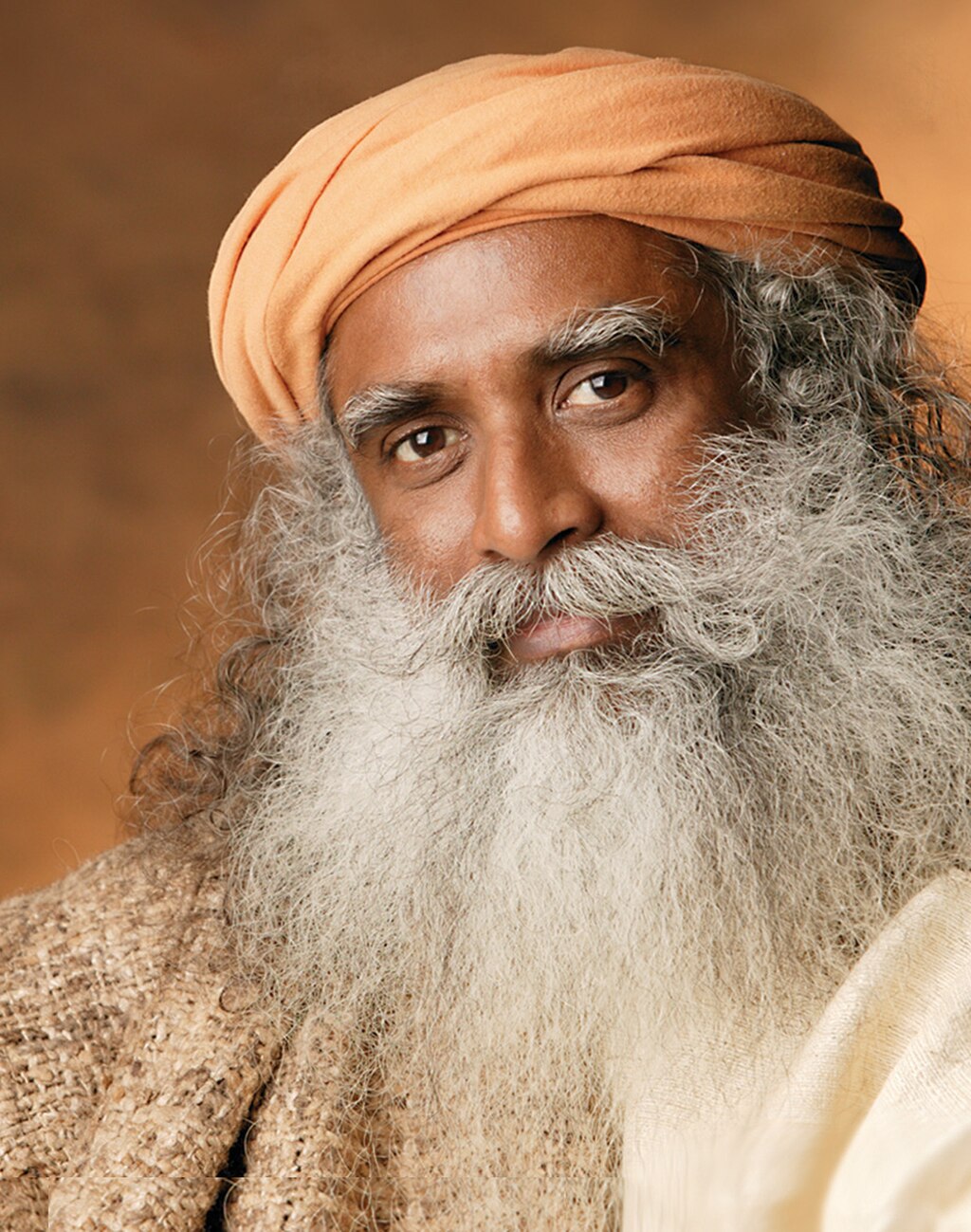
The quote by Sadhguru, "There is no other way to know. You have to experience," encapsulates a profound truth about the nature of understanding. In a world saturated with information, we often mistake knowledge for wisdom, believing that reading or hearing about a concept is sufficient to grasp its essence. Yet, Sadhguru invites us to recognize that true knowing transcends intellectual comprehension; it demands direct engagement with life itself. This distinction is crucial, as it challenges us to step beyond the confines of our minds and into the realm of lived experience.
In this age of rapid communication and digital distractions, the call to experience becomes even more significant. We are inundated with opinions, theories, and narratives that shape our understanding of reality. However, Sadhguru's assertion reminds us that the most profound insights arise not from external sources but from our own encounters with the world. This journey of experiential learning is not merely a personal endeavor; it is a universal quest that connects us to the essence of our being and the fabric of existence.
The image / the metaphor
At its core, Sadhguru's quote employs a straightforward yet evocative imagery that emphasizes the necessity of direct experience. The phrase "you have to experience" serves as a clarion call, urging us to engage with life in a visceral way. The verbs chosen—"know" and "experience"—suggest a dynamic interplay between the observer and the observed, where knowledge is not a passive reception but an active participation. This imagery evokes a sense of urgency, as if Sadhguru is beckoning us to step off the sidelines and immerse ourselves in the dance of life.
Diving deeper into the metaphor, we can see that experience is not merely about sensory engagement; it is about transformation. To experience is to allow oneself to be changed by what one encounters. This notion resonates with the yogic understanding of transformation through practice, where each moment of engagement becomes an opportunity for growth. In this light, Sadhguru's words illuminate the path of self-discovery, where knowing is not a destination but an ongoing journey shaped by our willingness to embrace the unknown.
In the speaker's tradition
Sadhguru's teachings are deeply rooted in the ancient tradition of yoga, which emphasizes the importance of direct experience in the pursuit of self-realization. Concepts such as prajna, or wisdom, and bhakti, or devotion, highlight the necessity of personal engagement with the divine and the self. In yoga, knowledge is often seen as a stepping stone, but it is through the practice—whether it be asana, meditation, or self-inquiry—that one truly comes to know the self and the universe. This experiential approach aligns with the broader spiritual principle of dharma, which calls individuals to live in accordance with their true nature and purpose.
Moreover, Sadhguru's emphasis on experience echoes the teachings found in various spiritual texts. For instance, the Bhagavad Gita speaks of the importance of action and engagement in the world, suggesting that true understanding arises from performing one's duty with awareness and intention. Similarly, the Zen tradition emphasizes the concept of sunyata, or emptiness, which invites practitioners to experience reality without the filters of preconceived notions. In both cases, the essence of knowing is rooted in the lived experience, reinforcing Sadhguru's assertion that knowledge must be embodied.
Living the teaching
Consider a modern scenario where this teaching resonates profoundly: the act of learning a new skill, such as playing a musical instrument. Many individuals may read books or watch videos on music theory, believing they understand the mechanics of playing. However, it is only through the act of practice—strumming the strings, feeling the vibrations, and making mistakes—that one truly learns to play. This process of trial and error, of engaging with the instrument and allowing oneself to be vulnerable, embodies Sadhguru's message that knowledge is incomplete without the richness of experience.
This teaching also finds application in the realm of relationships. Imagine a moment of conflict with a loved one, where words may fail to convey the depth of one's feelings. In such instances, it is not enough to understand the dynamics of communication intellectually; one must engage with the emotions at play. By choosing to listen deeply, to empathize, and to be present, we move beyond mere understanding into a realm of connection that can only be forged through experience. Here, Sadhguru's wisdom serves as a guiding light, reminding us that the heart of knowing lies in our willingness to engage fully with one another.
A reflection
As we contemplate Sadhguru's profound assertion, we are invited to reflect on our own lives: What experiences have shaped our understanding of ourselves and the world around us? In what ways might we be holding back from fully engaging with life, relying instead on secondhand knowledge? This contemplation encourages us to embrace the richness of direct experience, recognizing that true wisdom is not merely a collection of facts but a tapestry woven from the threads of our lived moments. As we ponder these questions, may we find the courage to step into the unknown and discover the depths of knowing that await us.