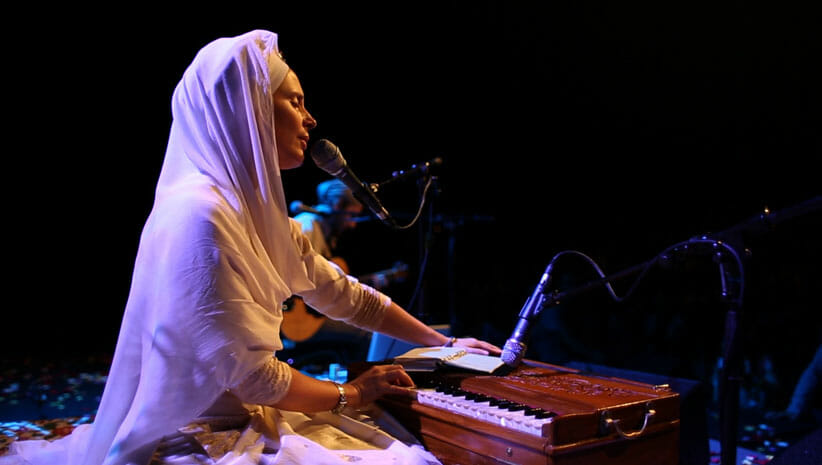
In the profound words of Snatam Kaur, "The Naam is older than time," we are invited to explore the essence of Naam, a concept deeply rooted in Sikh spirituality. This assertion suggests that Naam transcends the temporal confines of our existence, embodying a truth that predates the very fabric of time itself. Understanding this statement is crucial, as it challenges our conventional perceptions of reality and invites us to consider a deeper, more eternal aspect of our being.
As we delve into this quote, we recognize that it speaks to the heart of spiritual inquiry. The notion of Naam, often translated as "the Name" or "the Divine Word," serves as a bridge between the finite and the infinite. By asserting its ancient nature, Kaur encourages us to reflect on our relationship with the Divine and the timeless truths that guide our lives. This exploration is not merely academic; it holds the potential to transform our understanding of existence and our place within it.
The image / the metaphor
The imagery within the quote evokes a sense of depth and continuity, suggesting that Naam exists beyond the linear progression of time. The use of the word "older" implies a primordial quality, a foundation upon which all creation rests. This evokes a feeling of reverence, as if we are being invited to connect with something vast and eternal, a source that has always been present, waiting for us to recognize its significance.
Diving deeper into the metaphor, we can perceive Naam as a cosmic thread that weaves through the tapestry of existence. It is not merely a name or a sound; it is the essence of creation itself, a vibration that resonates with the heart of the universe. This understanding encourages us to see our lives as part of a larger narrative, one that is infused with the sacred and the timeless. In this light, Naam becomes a guiding force, illuminating our path and reminding us of our inherent connection to the Divine.
In the speaker's tradition
Snatam Kaur's assertion about Naam finds its roots in the rich spiritual tradition of Sikhism, where the concept of Naam is central to understanding the nature of God and the universe. In Sikh thought, Naam is often associated with the practice of bhakti, or devotion, which emphasizes a personal relationship with the Divine. This relationship is not merely transactional but is rooted in love, surrender, and the recognition of the Divine presence in all aspects of life. The idea of Naam being older than time aligns with the Sikh understanding of God as timeless and beyond human comprehension.
Furthermore, this concept resonates with the teachings found in the Guru Granth Sahib, the central religious scripture of Sikhism. In this text, the notion of Naam is frequently linked to the idea of shabad, or divine sound, which is believed to be the creative force behind the universe. The Guru Granth Sahib states, "The Word (Shabad) is the essence of all that exists," reinforcing the idea that Naam is not only ancient but also foundational to all creation. This connection invites us to explore how our understanding of Naam can deepen our spiritual practice and enhance our connection to the Divine.
Living the teaching
In our modern lives, the teaching of Naam being older than time can manifest in various ways. Consider a moment of stillness in a busy day, where one pauses to breathe deeply and connect with the present. In that brief interlude, the recognition of Naam can emerge as a profound awareness of the Divine presence within and around us. This practice of mindfulness serves as a reminder that even amidst the chaos of daily life, there exists a timeless essence that anchors us and offers solace.
Another application of this teaching can be found in our relationships. When faced with conflict or misunderstanding, recalling the timeless nature of Naam can inspire us to approach the situation with compassion and understanding. By recognizing the shared humanity and the Divine spark within each person, we can transcend the limitations of time-bound grievances and foster a deeper connection rooted in love and respect. This perspective encourages us to cultivate relationships that honor the eternal essence of each individual, allowing for healing and growth.
A reflection
As we contemplate the profound statement, "The Naam is older than time," we are invited to reflect on our own relationship with the Divine. How can we cultivate a deeper awareness of this timeless essence in our daily lives? This question encourages us to explore the ways in which we can connect with the sacred, allowing the wisdom of Naam to guide our actions and interactions. In doing so, we may discover a path that leads us to a more profound understanding of ourselves and our place within the universe.