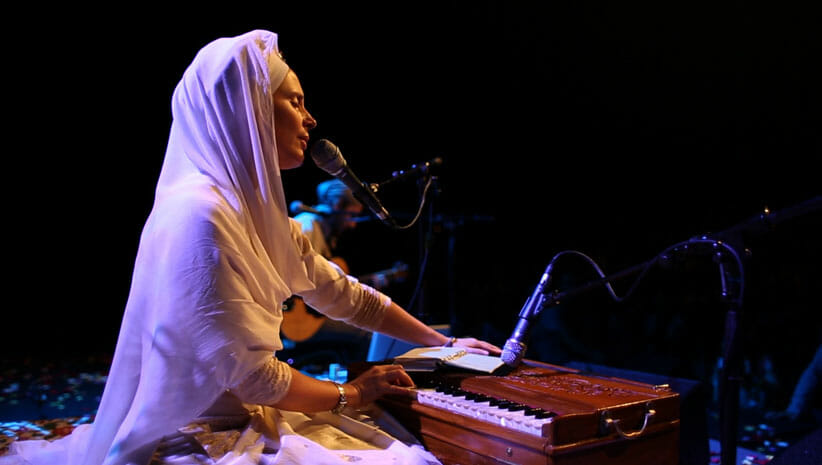
In her profound assertion, "To live in Naam is to live in the divine," Snatam Kaur invites us to explore the essence of existence through the lens of Naam, or the divine name. This statement serves as a reminder that our daily lives can be imbued with spiritual significance when we align ourselves with the sacred. The stakes are high; to live in a state of divine awareness is to transcend the mundane and connect with a deeper reality that nourishes our souls and guides our actions.
Delving deeper, Kaur's words challenge us to consider what it truly means to embody the divine in our everyday experiences. Naam is not merely a concept but a living reality that can transform our perception of life. By embracing this divine presence, we open ourselves to a profound sense of connection, purpose, and love that permeates all aspects of our being. This exploration is not just an intellectual exercise; it is a call to action, urging us to live authentically and harmoniously with the universe.
The image / the metaphor
The imagery in Kaur's quote evokes a sense of immersion in something greater than ourselves. To "live in Naam" suggests a state of being where the divine is not an abstract idea but a tangible reality that shapes our thoughts, actions, and interactions. The verb "live" emphasizes an active engagement with this divine presence, indicating that it is not enough to merely acknowledge Naam; we must embody it in our daily lives. This living experience of the divine invites us to cultivate a deep awareness of our connection to the universe and to each other.
In the speaker's tradition
Snatam Kaur's teachings are deeply rooted in Sikhism, a tradition that emphasizes the importance of Naam as a means of connecting with the divine. In Sikh philosophy, Naam represents the essence of God, and living in accordance with it is seen as a path to spiritual liberation. This concept resonates with the idea of dharma, or righteous living, which encourages individuals to align their actions with their higher purpose. The practice of Naam simran, or the repetition of God's name, serves as a powerful tool for cultivating this divine awareness in everyday life.
Furthermore, the notion of living in Naam can be compared to the concept of bhakti, or devotion, found in various spiritual traditions. Bhakti emphasizes a loving relationship with the divine, where the devotee surrenders their ego and opens their heart to the presence of God. In the Guru Granth Sahib, the central scripture of Sikhism, we find numerous hymns that extol the virtues of Naam and its transformative power. One such hymn states, "Those who meditate on the Naam, the Name of the Lord, are forever in bliss," highlighting the profound joy that arises from living in alignment with the divine.
Living the teaching
Consider a modern scenario where the teaching of living in Naam can be applied: a busy professional navigating the challenges of a demanding work environment. In the midst of deadlines and pressures, one might find it easy to become disconnected from their inner self and the divine presence. However, by consciously invoking Naam through moments of mindfulness—perhaps taking a few deep breaths or reciting a sacred phrase—this individual can reconnect with their spiritual essence. This practice not only alleviates stress but also fosters a sense of purpose and clarity in their work.
In a different context, imagine a relationship strained by misunderstandings and conflicts. By embracing the teaching of living in Naam, individuals can approach their interactions with a spirit of compassion and understanding. Instead of reacting from a place of ego, they can invoke the divine presence within themselves, allowing love and empathy to guide their responses. This shift in perspective can transform the relationship, fostering deeper connections and healing the wounds that may have arisen.
A reflection
As we contemplate Snatam Kaur's profound statement, we are invited to reflect on our own relationship with the divine. How can we cultivate a deeper awareness of Naam in our daily lives? In what ways can we surrender to this divine presence, allowing it to guide our actions and interactions? This contemplative inquiry invites us to explore the richness of our spiritual journey and to embrace the transformative power of living in the divine.