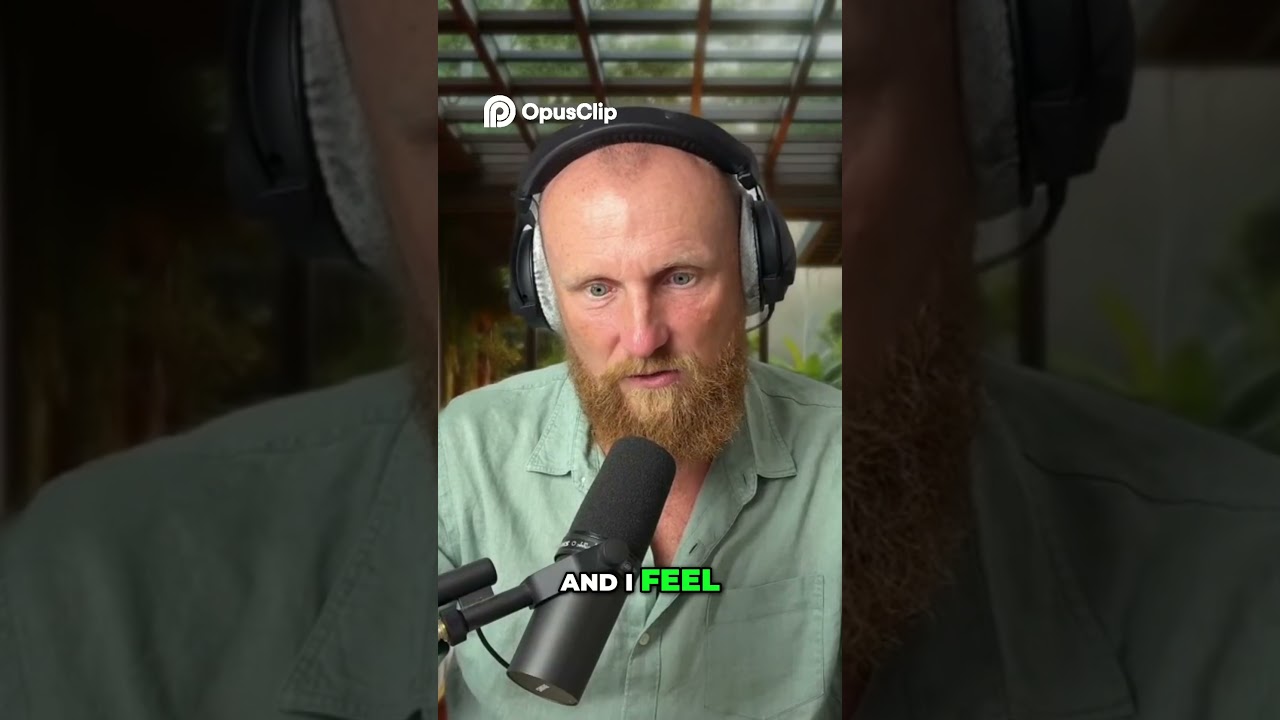
It's 2 p.m. on a Wednesday. Your email has been relentless. A conversation from this morning is still echoing in your head. Your shoulders are tight. Your jaw is tight. You feel caught between two competing deadlines and the particular brand of ambient anxiety that modern work has normalized. Then you pause. Just five minutes. You find your phone, press play on Tomek Wyczesany's guided meditation, and give yourself permission to stop pushing. "Wherever you are, however you feel, sitting or standing, with your eyes open or closed," his voice arrives, "this is a great place to start." That radical permission—that right now, exactly as you are, you're ready—is where the teaching begins.
Wyczesany's five-minute mindful pause is deceptively simple. It's not a transcendence practice or a gateway to altered states. It's an interruption. A systematic rewiring of your relationship to three domains of your inner world: your thoughts, your emotions, and your bodily sensations. And through that rewiring, it plants what Wyczesany calls "seeds of awareness that will grow over time." What makes this framework distinctive is its refusal to treat any part of your experience as the problem. You don't need thoughts to be quiet. You don't need to feel calm. You don't need your body to stop expressing what it's expressing. All of it is welcome. The work isn't about fixing yourself; it's about learning to know yourself differently.
What Is the Architecture of Observation?
After three deep cleansing breaths, the meditation moves into three distinct phases of awareness. Each one invites you to shift your attention to a different domain and observe what you find.
First, thoughts. "Is your mind quiet or active?" Wyczesany asks, without judgment about which is preferable. As you notice the activity of your mind—or the unusual silence—he offers a teaching that reframes everything that follows: "Whatever your thoughts, remember they don't define you. You are not your thoughts. So, just let them be as they are without judging or trying to change them."
This distinction is foundational. You are not your thinking. Thoughts arise, thoughts pass, but the "you" who notices them is separate. This gap—between the thinker and the thinking—is where freedom lives. Most people spend their lives identified with every thought that crosses their mind, treating reactive thinking as destiny. The teaching invites you out of that identification without asking you to stop thinking.
The second phase targets emotions. Wyczesany introduces a scale—one through ten, completely calm to extremely anxious—as a tool for precise self-assessment. "Where are you?" he asks. Not where do you wish you were. Not where you think you should be. Where are you, actually?
Then the reframe: "However you feel, it is okay to experience these emotions. Remember, they are temporary. So, for the moment, just let them be."
Two teachings collapse into one sentence. First, your emotional state receives unconditional permission. Second, it receives temporal context. Whatever you're feeling is not a permanent condition; it's a weather pattern passing through. This shift from "this is how I am" to "this is how I am, in this moment" is quietly radical. It removes the urgency from emotional rescue.
The third phase moves into the body. Wyczesany asks you to recognize immediate sensations—tension, warmth, heaviness, ease, wherever the body is expressing itself right now. Then he offers an interpretation that transforms how you relate to sensation: "These sensations are the way of your physical body to experience your emotional state."
Your sensations aren't noise or distraction. They're not problems to solve. They're your body's way of translating emotional reality into physical information. A tight chest isn't an error; it's data. A flutter in the stomach isn't a malfunction; it's communication. The instruction to acknowledge these sensations without judgment completes the frame: nothing here needs to be different.
How Do Seeds Grow Into Practice?
At the end of the five-minute pause, Wyczesany introduces the practice architecture that transforms a single meditation into a path: "You just planted a seed of awareness that will grow over time. The more seeds you plant, the more awareness you grow."
The metaphor is deliberate. Growth is organic, not mechanical. You're not "making progress" in a competitive sense or moving up a ladder. You're cultivating a garden. Each meditation deposits another seed. The seeds don't guarantee specific fruit or predetermined outcomes. They create the conditions for growth.
Then comes the commitment structure: "After you finish, set up your timer to 2 hours and repeat the mindful pause if you can."
Two hours is specific for a reason. It's the gap between repetitions where life actually happens. You meditate; the meditation ends; the world intervenes. You hit traffic, receive difficult news, get interrupted, experience friction. Then, at the two-hour mark, you pause again. You're not meditating on your serene baseline; you're checking in with whatever you've become in those two hours. This constant reset—this perpetual return to "where are you now?"—is what allows repetition to deepen awareness rather than deepen habit.
The two-hour rhythm also makes the practice feasible across a day. Unlike extended retreat practices or hour-long sessions that demand carved-out time, a five-minute reset can fit into the texture of ordinary life. Before a meeting. After a difficult conversation. During lunch. Before sleep. The accessibility isn't incidental; it's essential to the teaching.
Why Does This Framework Transform Your Relationship to Experience?
The genius of Wyczesany's structure is that it teaches through demonstration, not doctrine. You're not told that thoughts aren't the truth; you're given an active practice of observing thoughts as thoughts—as temporary mental events rather than facts about reality. The understanding lands experientially.
Similarly, emotions aren't reframed through theory. You're invited to locate your emotional state on a scale, acknowledge it as real, recognize it as temporary, and let it be. No fighting, no suppression, no identification. Just witnessing. The emotional rescue agenda dissolves because you're given a different relationship to experience itself.
The body-emotion link is equally significant. Most contemplative traditions encourage retreat from the body into pure mind. Wyczesany keeps the body as an active participant in awakening. Your sensations matter. They carry information. The tension in your shoulders isn't a distraction from spiritual practice; it's part of what you're here to understand about yourself.
Over time, as you plant seeds through repetition, a shift occurs. You begin catching yourself mid-thought and remembering you're not the thought. You feel anxiety rising and recognize it as temporary. You notice sensation shifting, flowing, releasing. The practice becomes embodied. It becomes the way you relate to every moment, not just the five minutes you've set aside.
Where to Go From Here
This five-minute pause can be an entry point to longer meditation or a lifetime practice in itself. The accessibility Wyczesany offers—that you need no special conditions, no ideal state, no retreat from your actual life—means it fits anywhere you need a reset.
More importantly, the framework he teaches extends beyond the meditation. The understanding that thoughts don't define you becomes a lens for evaluating the stories your mind tells. The recognition that emotions are temporary becomes a way to navigate difficulty with less panic. The awareness of sensation as messenger becomes a way to listen to what your body knows.
As you practice, return to Wyczesany's metaphor. You're planting seeds. You won't see the forest overnight. But seeds, given time and consistent water, eventually root. They grow. The awareness you're cultivating will quiet your mind not by forcing silence, but by changing your relationship to the sound. It will steady your emotions not by making you numb, but by letting you meet what arises without being carried away. And it will reconnect you to your body not as a problem to solve, but as a source of wisdom always speaking if you know how to listen.