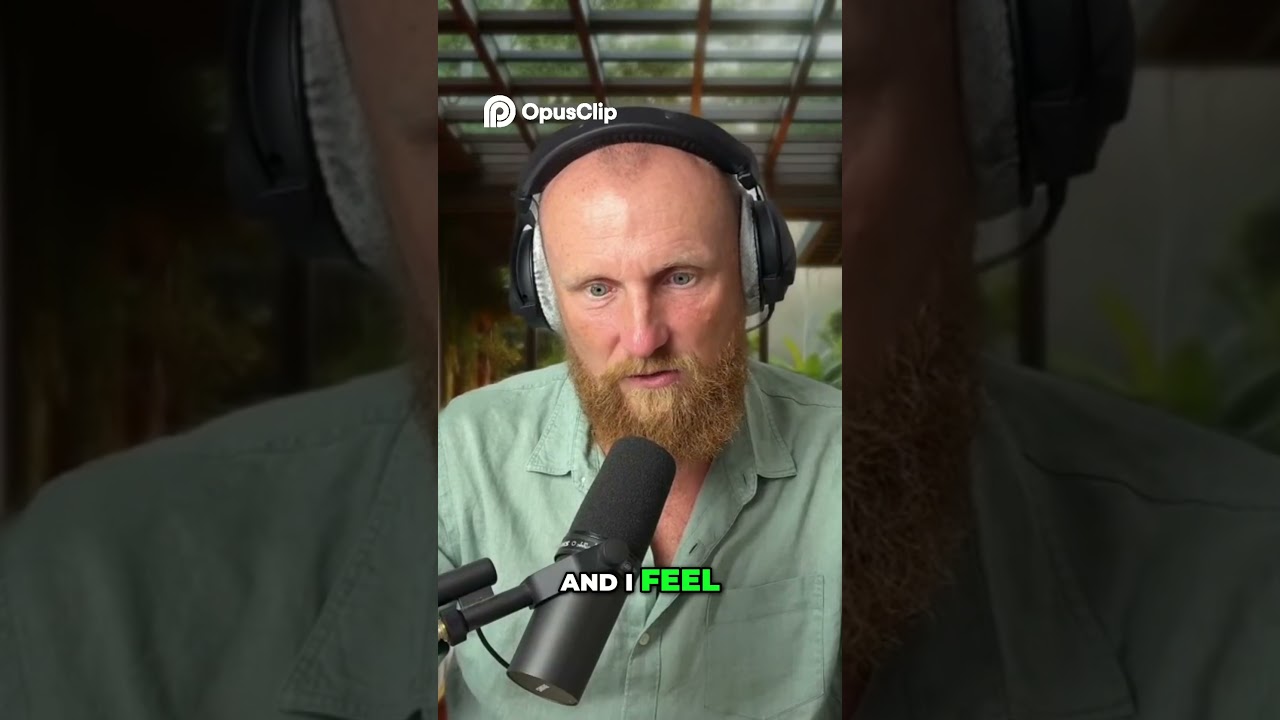
At morning, the mind is already talking. Dr. Tomek Wyczesany wakes to find his thoughts already in motion—"the usual chatter," as he describes it in the opening moments of this guided meditation. Not catastrophic, not even noteworthy on its own, but the default state: the mind spinning before you've asked it to, before you've even fully registered the beginning of the day. It's a moment most people who've ever tried to meditate recognize instantly. The mind doesn't wait for permission to engage. It wanders as naturally and automatically as the heart beats, pumping worry and planning and memory in an endless cycle that feels both involuntary and totalizing.
In this ordinary recognition lies a quiet paradox that becomes the center of Wyczesany's teaching. Mind wandering, he observes, might be the only skill that requires absolutely no practice at all. We don't train ourselves to worry about things that never happen. We don't rehearse the anxieties about future scenarios that exist only in thought. The mind executes these routines automatically, on its own power, without any conscious effort or rehearsal. And yet—and this is the key observation—the practice that stills this attention, that brings a racing mind to genuine rest, requires devoted, patient work. It requires intention. It requires practice. It requires showing up, again and again, to the work of settling.
This fundamental imbalance points to the problem that all meditation ultimately addresses. If distraction is the default setting, if the mind wanders by its own nature, then resisting that wandering is like swimming upstream. Instead, what's needed is a tool that works with the nature of mind rather than against it. What's needed is something practical, repeatable, and available whenever the chatter returns.
Mantra is often perceived as something exotic and shrouded in mystique. In popular culture and even in many spiritual contexts, it carries the weight of ancient tradition—a syllable or phrase from a distant language that supposedly works on hidden levels of consciousness, a fragment of sacred speech that holds power beyond ordinary words. There's an assumption that mantra is magical, that it works through something other than straightforward human attention and intention. Wyczesany addresses this assumption directly in the opening teachings: "Mantra is not some magical word."
Instead, he reframes the concept entirely through etymology and function. Mantra, he explains, is derived from two Sanskrit roots. Manas means mind. Tra means tool. Together, they form a literal definition: mantra is "a tool for the mind." No mysticism required. No invisible mechanisms. Just a tool.
This definitional clarity resets everything about how we understand the practice. A tool is something utilitarian. A hammer is a tool for driving nails. A knife is a tool for cutting. A tool has a clear purpose, and once that purpose is fulfilled, the tool's job is done. This is how mantra works. Wyczesany teaches: "Once you are still your mind, the mantra is no longer needed—that is until next time your mind wanders, in which case you use the tool again." In other words, there is no graduation ceremony where you "master" the mantra and move beyond it. There is no advanced stage where you no longer need this tool. Instead, there is perpetual availability. The tool remains in your pocket. You reach for it whenever the mind needs steadying, and you set it aside when the steadying is complete. Then life happens, the mind wanders, and you reach for it again.
This practical, non-mystical understanding is liberating. It removes the pressure of spiritual performance or transcendence. You're not trying to achieve enlightenment through the mantra. You're simply using a technique to quiet the mind when it needs quieting. That's all.
For this particular meditation practice, the mantra offered is simple: the word "yes." Wyczesany explains the selection process, or rather, explains why the selection process doesn't matter much: "It really doesn't matter what word you choose as long as it doesn't create an emotional attachment that would stir your mind the opposite to what we try to achieve."
The logic is straightforward. If you choose a mantra that carries emotional weight—a word associated with a person you love, or someone you resent, or a traumatic memory—then repeating that word will stir the mind in unwanted directions. The mind will start spinning narratives around that word instead of settling into silence. So the criteria for a mantra are actually quite minimal: it should be neutral, it should be easy to remember, and it should be available to you. "Yes" meets all these criteria. It's an ordinary English word, clean, everyday, with no spiritual baggage. It carries no religious or cultural weight, no historical significance. It's simply a word—a sound—chosen for its availability and its neutrality.
This emphasis on neutrality is instructive in itself. It suggests that the power of the practice isn't in the content of the word but in the use of it. The mantra works not because it contains some secret meaning or vibration, but because the repetition of any neutral word, synchronized with breath and attention, gives the mind something steady to hold onto. When the mind has a point of focus, it settles. When the focus wanders, you gently bring it back. This cycle—focus, wandering, returning—is the actual practice.
The meditation doesn't jump directly into mantra repetition. Instead, Wyczesany builds the conditions for the mantra to work effectively. This pedagogical structure is important, because it suggests that the success of the practice depends not only on the mantra itself but on the groundwork that precedes it.
The practice begins with intention-setting. Before any meditation, before the eyes close, there's a quiet agreement about what this time is for. Wyczesany guides: "Begin by setting an intention for this meditation. My intention for you is to help you to still your mind and do it in a calm not judgmental way." This opening is important because it establishes tone. The practice isn't about forcing the mind to obey or achieving some perfect state. It's about a gentle approach to stillness, with non-judgment as a core value.
Then attention moves to the body. Wyczesany guides a simple body scan: "Is there any tension any discomfort that still gets in the way of your relaxation? If this is the case simply soften that place in your body allowing it to relax." There's no aggressive release here, no pushing or forcing. Just gentle permission. Where there is tightness, you soften. The body is prepared as a vessel for the practice.
Only after this comes breath awareness. And here, Wyczesany emphasizes the importance of not manipulating the breath. "It doesn't matter whether your breath is long or short deep or shallow simply trying to familiarize yourself with the natural flow of your breath which will change during this practice anyway." This instruction is crucial. The breath isn't something to be controlled or "perfected." It's simply something to observe as it naturally occurs. By the time the mantra is introduced, the ground has been prepared: the body is settled, the breath is observed, the intention is clear.
The introduction of mantra to breath is gradual and gentle. Wyczesany guides: "Now add mental word yes to each in-breath and each out breath breathing in yes breathing out yes do it as gently as possible." The repetition is synchronized with the natural rhythm of breathing. As you inhale, the word "yes" moves through the mind. As you exhale, it returns.
The quality of this repetition is not incidental; it's central to how the technique works. Wyczesany emphasizes: "Allow your mantra to be reflection of the intention. The softer and gentler your mantra the quicker your mind will settle down." This is not decorative advice about tone; it points to a principle embedded in the practice itself. The way you say the mantra is "a reflection of the state you try to achieve."
In other words, the practice doesn't work toward stillness as something external and distant. The practice embodies stillness already. If you say the mantra harshly, with effort and strain, you're practicing harshness and strain. If you say it softly, with ease and gentleness, you're practicing the very qualities you're trying to cultivate. This is a radically different understanding of meditation than the goal-oriented model many people bring to it. You're not trying to get somewhere else. You're practicing being the way you want to be.
The mind will wander. This is not a possibility; it's a certainty. Wyczesany teaches this without apology: "You may notice that after a couple of repetitions your mind starts to wander and every time this happens you simply recognize the mind wandering and bring yourself back to the sound of mantra." There's no scolding, no sense that wandering is a failure to be corrected or a sign that you're doing the practice wrong.
This reframing is essential. In much goal-oriented thinking, wandering attention is seen as failure. But in this practice, it's simply what happens. It's what minds do. The instruction isn't to prevent wandering but to notice when it occurs and gently return attention to the mantra. This cycle—focus, wandering, noticing, returning—is the practice. Each moment of noticing that the mind has drifted is itself an act of awareness. Each return to the mantra is a strengthening of attention. The wandering and the returning are not opposing forces; they are partners in the work. Without the wandering, there would be no practice. Without the returning, there would be no development.
As the meditation continues, Wyczesany invites a subtle deepening through even greater gentleness. The mantra becomes softer, almost a whisper within the mind's own silence. Wyczesany guides: "As your mind settles down a bit introduce even more gentleness into your mantra try to say it in your mind as softly as possible." The body, already settled, continues to relax. The invitation is to go "deeper and deeper into the stillness into the natural state of being."
At this point in the practice, Wyczesany's voice gradually recedes. The meditator continues alone, held by the invisible architecture of the mantra and the teacher's presence still felt in the room—a space held open for the practice itself to unfold. This transition from guided instruction to independent practice is important. It acknowledges that ultimately, you must find your own relationship to the stillness. The guide can point the way, can offer the structure, but the actual experience is yours alone.
The return to ordinary consciousness is as carefully structured as the descent into stillness. The mantra is gently released. Attention is brought back not all at once, but gradually, through the senses. Wyczesany guides: "Let go of mantra and bring your attention again to your body sensations. Connect with your physical senses. Notice an external sound. Reconnect with a sense of touch through your hands resting in your lap through your feet on the floor." The reorientation moves through each sensory channel, slowly reestablishing connection with the body and the world.
Then comes movement: toes wiggle, fingers stretch, the head rolls gently from side to side. A final deep cleansing breath. The eyes open. The student has completed a full cycle from ordinary consciousness into stillness and back again. What has changed? The chatter hasn't disappeared. The mind hasn't been permanently restructured. But in the space of quiet that was cultivated, the meditator has touched something real—a quality of stillness that exists beneath the constant motion of thought. The practice doesn't erase the mind's capacity to wander; rather, it reveals that there is another capacity available alongside it: the capacity to notice wandering and gently return.
This is the radical pragmatism of mantra practice as Wyczesany teaches it. It is not about transcendence or permanent transformation or the pursuit of some elevated spiritual state. It is about a skill—a practical, repeatable skill—that you can reach for whenever you need it, as often as you need it. As he reminds students at the close: "Remember you can use mantra at any time of your day as your aide and as your ally to help you to quiet and settle your mind in times when you need it."
The tool doesn't belong in a special box marked "For Meditation Only." It lives in your pocket, in your breath, in the simple word "yes." When the chatter returns—and it will—you have something to reach for. And each time you use it, you strengthen the capacity to notice and return. This is where the democratic genius of the practice reveals itself: it requires no special circumstances, no pristine environment, no hours of preparation. You can sit in formal meditation for eighteen minutes, yes. But you can also pause in your workday, sync your breath with the word "yes" for three minutes, and feel the settling happen. You can use it in traffic, in a waiting room, in the middle of a difficult conversation. The tool is always available because the breath is always available, and attention is always available.
The most direct path forward is to practice this meditation regularly. Wyczesany offers the practice as a morning ritual, but the instruction to use mantra "at any time of your day" suggests flexibility. You might sit with this guided meditation once, to learn the structure. Then you might sit with it again, letting the rhythm become familiar. Eventually, you may practice without guidance, using the word "yes" and the technique on your own—in the morning, during the day, whenever the mind needs steadying.
Beyond the practice itself, the reframing of mantra as a tool rather than a mystical artifact opens other possibilities. If mantra is simply a word paired with breath and attention, then the specific word matters less than the commitment to the practice. You might eventually choose a different mantra—a word that feels personally resonant but carries no emotional charge. You might extend the practice, sitting for longer than eighteen minutes, or shorten it for moments when you have only a few minutes of quietness available.
The teaching also invites reflection on where else in your life you might apply the principle of gentleness as a practice. If softness settles the mind faster than strain, what does that suggest about how you approach difficult moments more generally? If noticing without judgment is a core instruction in meditation, how might that same quality transform your relationship to difficult thoughts and emotions throughout the day? The meditation, in other words, is not isolated from life. It's a laboratory for discovering principles that apply everywhere.