EveryGetaway

Alle Retreats durchsuchen

Find your transformative retreat

retreats

Yoga Retreats
Meditation Retreats
Wellness Retreats
Spiritual Retreats
Adventure Retreats
Creative Retreats
Couples Retreats
Detox & Cleanse
Fitness Retreats
Corporate Retreats
Beliebte Reiseziele
BaliSedonaLos AngelesCosta RicaNew YorkSan FranciscoAustinMiamiJoshua TreeTulum
Alle Kategorien anzeigenAlle Reiseziele anzeigen

Alle Funktionen entdecken

Leistungsstarke Tools für Ihre Veranstaltungen

Plattform-Funktionen

Intelligente dynamische Preisgestaltung
Ticket-Kategorien
Sitzplatzreservierung
Warenkorbabbruch-Wiederherstellung
Besucher-Wiedergewinnung
Spenden & Staffelpreise
Affiliate-System
Ticket-Scanner
Rabattcodes
Individuelle Fragen
Ticket-Teilen
Upsells & Extras
Analysen & Berichte
E-Mail-Sequenzen
Warteliste / Benachrichtigen / Erinnern
Menschen & Orte
Retreat LeadersRetreat OrganizersRetreat CentersKnowledge BaseInspiration
Alle Funktionen anzeigenÜber uns
PreiseBlog
Language
Saved events
Alle Veranstaltungen durchsuchen

retreats

Yoga RetreatsMeditation RetreatsWellness RetreatsSpiritual RetreatsAdventure RetreatsCreative RetreatsCouples RetreatsDetox & Cleanse

Beliebte Reiseziele

BaliSedonaLos AngelesCosta RicaNew YorkSan Francisco

Menschen & Orte

Retreat LeadersRetreat OrganizersRetreat CentersKnowledge BaseInspiration

Plattform-Funktionen

Intelligente dynamische PreisgestaltungTicket-KategorienSitzplatzreservierungWarenkorbabbruch-WiederherstellungBesucher-WiedergewinnungSpenden & StaffelpreiseAffiliate-SystemTicket-ScannerRabattcodesIndividuelle FragenTicket-TeilenUpsells & ExtrasAnalysen & BerichteE-Mail-SequenzenWarteliste / Benachrichtigen / Erinnern
Alle Funktionen anzeigenÜber uns
PreiseBlog
AnmeldenSeekersRetreat leaders
  • Alle Retreats durchsuchen
  • Für Suchende
  • Yoga Retreats
  • Meditation Retreats
  • Wellness Retreats
  • Spiritual Retreats
  • Adventure Retreats
  • Creative Retreats
  • Couples Retreats
  • Detox & Cleanse
  • Fitness Retreats
  • Corporate Retreats
  • Retreats
  • Workshops
  • Alle Kategorien →
  • Bali, Indonesia
  • Costa Rica
  • Tulum, Mexico
  • Sedona, Arizona
  • Thailand
  • Portugal
  • India
  • Hawaii
  • Greece
  • Spain
  • California
  • Colorado
  • Sri Lanka
  • Morocco
  • Alle Städte →
  • Für Retreat leaders
  • Für Organisationen
  • Preise
  • 500.000+ Käufernetzwerk
  • Warenkorbabbruch-Wiederherstellung
  • Intelligente dynamische Preisgestaltung
  • Ticket-Kategorien
  • Wiederkehrende Veranstaltungen
  • Sitzplatzreservierung
  • Affiliate-System
  • Warteliste / Benachrichtigen
  • Ticket-Scanner
  • Einbettungs-Widget
  • Event-Syndication
  • Nachrichten
  • Integrationen
  • Berichte
  • Alle Funktionen →
  • Über uns
  • Das Ökosystem
  • Blog
  • Glossar
  • Inspiration
  • Hilfe-Center
  • Kontakt
  • API-Dokumentation
  • Marken-Assets
  • Karriere
  • Presse
  • Nutzungsbedingungen
  • Datenschutzrichtlinie

Retreats

  • Alle Retreats durchsuchen
  • Für Suchende
  • Yoga Retreats
  • Meditation Retreats
  • Wellness Retreats
  • Spiritual Retreats
  • Adventure Retreats
  • Creative Retreats
  • Couples Retreats
  • Detox & Cleanse
  • Fitness Retreats
  • Corporate Retreats
  • Retreats
  • Workshops
  • Alle Kategorien →

Reiseziele

  • Bali, Indonesia
  • Costa Rica
  • Tulum, Mexico
  • Sedona, Arizona
  • Thailand
  • Portugal
  • India
  • Hawaii
  • Greece
  • Spain
  • California
  • Colorado
  • Sri Lanka
  • Morocco
  • Alle Städte →

Für Retreat leaders

  • Für Retreat leaders
  • Für Organisationen
  • Preise

Funktionen

  • 500.000+ Käufernetzwerk
  • Warenkorbabbruch-Wiederherstellung
  • Intelligente dynamische Preisgestaltung
  • Ticket-Kategorien
  • Wiederkehrende Veranstaltungen
  • Sitzplatzreservierung
  • Affiliate-System
  • Warteliste / Benachrichtigen
  • Ticket-Scanner
  • Einbettungs-Widget
  • Event-Syndication
  • Nachrichten
  • Integrationen
  • Berichte
  • Alle Funktionen →

Unternehmen

  • Über uns
  • Das Ökosystem
  • Blog
  • Glossar
  • Inspiration
  • Hilfe-Center
  • Kontakt
  • API-Dokumentation
  • Marken-Assets
  • Karriere
  • Presse
  • Nutzungsbedingungen
  • Datenschutzrichtlinie
EveryGetaway
© 2026 EveryGetaway. Alle Rechte vorbehalten.
Inspire

Hallelujah Performance: Live Vocal and Electric Kora

Rafe Pearlman
Rafe Pearlman
Mar 4, 2023
6 Min. Lesezeit

This is a live studio performance of "Hallelujah" featuring singer Rafe Pearlman and electric kora player Daniel Berkman, recorded at the Pyramid House. The performance stands out for its extended improvisational introduction and an unexpected key change to F major that required Pearlman to adapt in real time—a musical moment that exemplifies the spontaneity and creative risk-taking at the heart of live instrumental and vocal collaboration.

Lesen · 7 Abschnitte

What makes this rendition of Hallelujah different?

This live performance of "Hallelujah" departs from conventional studio versions by embracing spontaneity and real-time adaptation. Rather than following a predetermined arrangement, Rafe Pearlman and Daniel Berkman constructed the piece around an extended improvisational introduction before moving into the song proper. This approach privileges the interplay between vocalist and instrumentalist, allowing each musician to respond to the other's phrasing and energy in the moment rather than executing a fixed template.

The most significant creative gesture in the arrangement is the key change. Berkman, playing electric kora, threw the composition into F major—a departure from the more common keys in which "Hallelujah" is typically performed. This wasn't predetermined; it emerged organically during the session. For Pearlman, singing "Hallelujah" in F for the first time required immediate vocal adjustment and flexibility. Rather than interrupting the flow to reset, he navigated the unexpected tonal shift, demonstrating the kind of adaptability that characterizes experienced ensemble musicians.

How does the electric kora shape the arrangement?

The electric kora, an amplified version of the traditional West African harp-like string instrument, brings a distinctive tonal character to this arrangement. Unlike acoustic guitar or piano, which dominate many versions of "Hallelujah," the kora's bright, plucked timbre creates a more textured, rhythmically complex foundation. Berkman's use of the electric kora suggests an interest in blending contemplative, devotional music (the song's spiritual register) with world music instrumentation, creating a sonic space that feels both intimate and expansive.

The electric amplification allows the kora's details—the subtle decay of each note, the resonance across its strings—to register clearly in a live setting. Rather than serving as mere harmonic accompaniment, the instrument functions as a melodic and textural partner to Pearlman's voice, suggesting shared compositional responsibility rather than a standard vocalist-plus-accompaniment hierarchy.

What does the improvisation reveal about ensemble musicianship?

The extended improv intro serves multiple functions. First, it establishes a shared sonic and emotional foundation between the two musicians before the familiar lyrics and melody arrive. Listeners hear Pearlman and Berkman finding each other's rhythms, testing dynamic range, and building trust through instrumental conversation. This extended foreground of pure musicianship—no lyrics, just voice and strings—draws attention to the quality of listening and response that underpins the entire performance.

Second, the improvisation signals to the audience that this is not a reproduction of a recorded arrangement, but a one-of-a-kind event. The stakes are raised slightly; there's a subtle risk in real-time music-making that doesn't exist in performances where every detail has been rehearsed and locked in. This vulnerability is often where the deepest listening happens, both from the musicians and from those bearing witness.

Why does singing in an unfamiliar key matter?

The decision to perform "Hallelujah" in F major, rather than its more common keys, highlights several aspects of vocal music-making. First, key choice directly affects a song's emotional color and its relationship to a singer's vocal range. A key that sits naturally in one vocalist's range may feel strained or lie awkwardly in another's. By choosing F, Berkman may have been testing the upper or lower boundaries of Pearlman's voice, or simply introducing a harmonic color that felt right for the moment.

More importantly, Pearlman's willingness to sing in a key he had not previously explored with "Hallelujah" demonstrates a crucial distinction between interpreting a song and being bound by precedent. Many singers develop a single "correct" key for a piece and perform it identically each time. Here, Pearlman approaches the tune with flexibility, suggesting that the emotional and spiritual content of "Hallelujah" transcends any single tonal center. The song's core—its lyrical and melodic essence—survives and even flourishes when relocated to a new key, provided the vocalist remains present and responsive to the shift.

What is the context of the Pyramid House performance?

The Pyramid House appears to have served as a venue or studio space for this recording, suggesting an intimate setting—likely smaller than a concert hall, with acoustics that favor clarity and presence. The presence of a dedicated video producer (Thomas John Holguin) and sound engineer (Jeremiah Holguin) indicates this was a professionally documented performance, not a casual recording, yet the description's conversational tone ("This was a fun rendition") and the admission that Pearlman had never sung the song in F before suggests an informal creative atmosphere. This combination—professional documentation + spontaneous musicianship—is common in the sacred music and kirtan communities, where high production values serve to honor and share spiritual and contemplative music without sacrificing the live, unpredictable energy that gives such music its power.

How does the voice function in this arrangement?

In many versions of "Hallelujah," the voice carries the song's narrative and emotional weight while instruments provide harmonic and rhythmic scaffolding. In this performance, Pearlman's voice remains the primary carrier of the lyrics and the song's devotional content, but it's framed differently. The extended improvisation positions his singing not as the obvious focal point but as one voice in a larger conversation. When he enters with text, he's joining a dialogue that's already underway, rather than initiating it.

This arrangement also allows the voice to function more as an instrument itself—concerned with tonal color, phrasing nuance, and responsiveness to the kora's movement. The willingness to shift key suggests that Pearlman is thinking of his voice less as a fixed instrument with immutable parameters and more as a flexible medium capable of adaptation and surprise.

Where to go from here

Listeners interested in this performance might explore other work by Rafe Pearlman and Daniel Berkman, particularly their collaborative arrangements of sacred and devotional music. The "Hallelujah" rendition exemplifies an approach to spiritual and secular contemplative music that prioritizes live ensemble interaction over pre-recorded fidelity. This aesthetic draws from traditions of kirtan, world music collaboration, and jazz-inflected improvisation—all of which value the real-time dialogue between musicians as essential to the music's meaning and power.

The performance also raises broader questions about how we teach and learn songs: whether mastering a single "definitive" version serves the music, or whether flexibility and willingness to explore new keys, arrangements, and interpretations better honors the song's spiritual and artistic potential. For those making or studying devotional music, sacred singing, or ensemble musicianship, this performance offers a model of how technical skill, creative risk, and collaborative generosity can coexist in a single, spontaneous moment.

Comments

Loading the conversation…

Rafe Pearlman
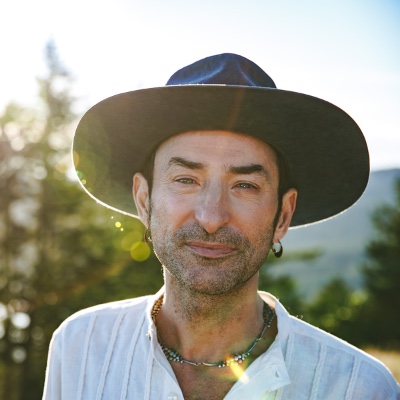
ArtistRafe Pearlman

Rafe Pearlman started his singing career with the wolves, ravens and sled dogs of the Alaskan wilderness. The wild nature of his exploratory singing has led to performances spannin…

Profil ansehenWebsite
Themen erkunden
Hallelujah-performanceLive-musicElectric-koraVocal-improvisationSacred-music

Hast du Fragen?

Häufig gestellte Fragen

An electric kora is an amplified version of the traditional West African kora, a 21-string harp-like instrument. The electric version uses pickups to amplify its sound, allowing the plucked strings' tonal nuances and resonance to register clearly in live settings, creating a bright, textured foundation for vocal or instrumental accompaniment.
Key choice affects a song's emotional color and its fit within a vocalist's range. Performing in an unfamiliar key can explore different tonal dimensions, test vocal flexibility, or introduce new harmonic colors that serve the arrangement. It also demonstrates that a song's core essence—its lyrics and melody—can thrive in different tonal centers.
Improvisation typically involves real-time musical creation guided by harmonic, rhythmic, or melodic frameworks and responsive interaction with other musicians. In this performance, the extended improv intro establishes a shared sonic foundation between voice and kora before the song's recognizable melody and lyrics arrive.
Experienced ensemble musicians develop acute listening skills and flexibility. When Daniel Berkman shifted to F major, Rafe Pearlman's ability to adapt in real time reflected his skill in reading the other musician's choices and adjusting his vocal approach without disrupting the flow, demonstrating trust and responsiveness.
Many sacred music traditions, including kirtan and devotional singing, prioritize live ensemble interaction and spontaneous creation as essential to spiritual power and meaning. Improvisation allows musicians to respond authentically in the moment rather than reproduce a fixed template, deepening both the performers' and listeners' engagement.
Smaller, more intimate venues like the Pyramid House can foster deeper connections between musicians and listeners because acoustics favor clarity and presence. This setting often encourages spontaneity and risk-taking compared to larger concert halls, where precision and consistency may take priority.
Professional documentation of live, spontaneous performances honors the real-time musicianship and creative risk involved. In sacred and contemplative music communities, high production values serve to capture and share the energy and authenticity of ensemble creation without losing the unpredictable live quality that gives such music power.

Weiterlesen

More from Rafe

Alle anzeigen
Sacred Chant "Shamayim": Blessings, Waters, and Wild Flowers
Inspire

Sacred Chant "Shamayim": Blessings, Waters, and Wild Flowers

Rafe Pearlman leads a live kirtan at St. Mark's Cathedral, weaving blessings and natural imagery into an embodied chant experience of healin…

1 min read
Live Music Performance at Orcas Center: Spiritual Song & Sound
Inspire

Live Music Performance at Orcas Center: Spiritual Song & Sound

Rafe Pearlman performs live kirtan and conscious music at the Orcas Center, offering spiritual song practice and sound healing rooted in dev…

1 min read
Deva Premal & Miten Return to Melbourne After Years Away
Inspire

Deva Premal & Miten Return to Melbourne After Years Away

Deva Premal and Miten announce their return to Melbourne's Palais Theatre on October 26, celebrating 35 years of mantra and music with longt…

1 min read
Ra Ma Da Sa: The Mantra of Total Healing
Inspire

Ra Ma Da Sa: The Mantra of Total Healing

Snatam Kaur's sacred healing mantra blends ancient Kundalini tradition with modern production, featuring harmonium, tabla, and ensemble arra…

1 min read

Weiter erkunden

Setze deinen Weg fort

Mehr Weisheit und Zusammenkünfte aus dem BrightStar-Verzeichnis.

Mehr Artikel

Durchstöbere die ganze Bibliothek an Lehren, Interviews und Leitfäden.

Zu allen Artikeln →

Lehrer & Künstler

Entdecke die Linien, Musiker und Wegbegleiter der bewussten Welt.

Künstler erkunden →

Event finden

Kirtan, Retreats, Klangbäder, Atemarbeit, Festivals — bald in deiner Nähe.

Events ansehen →