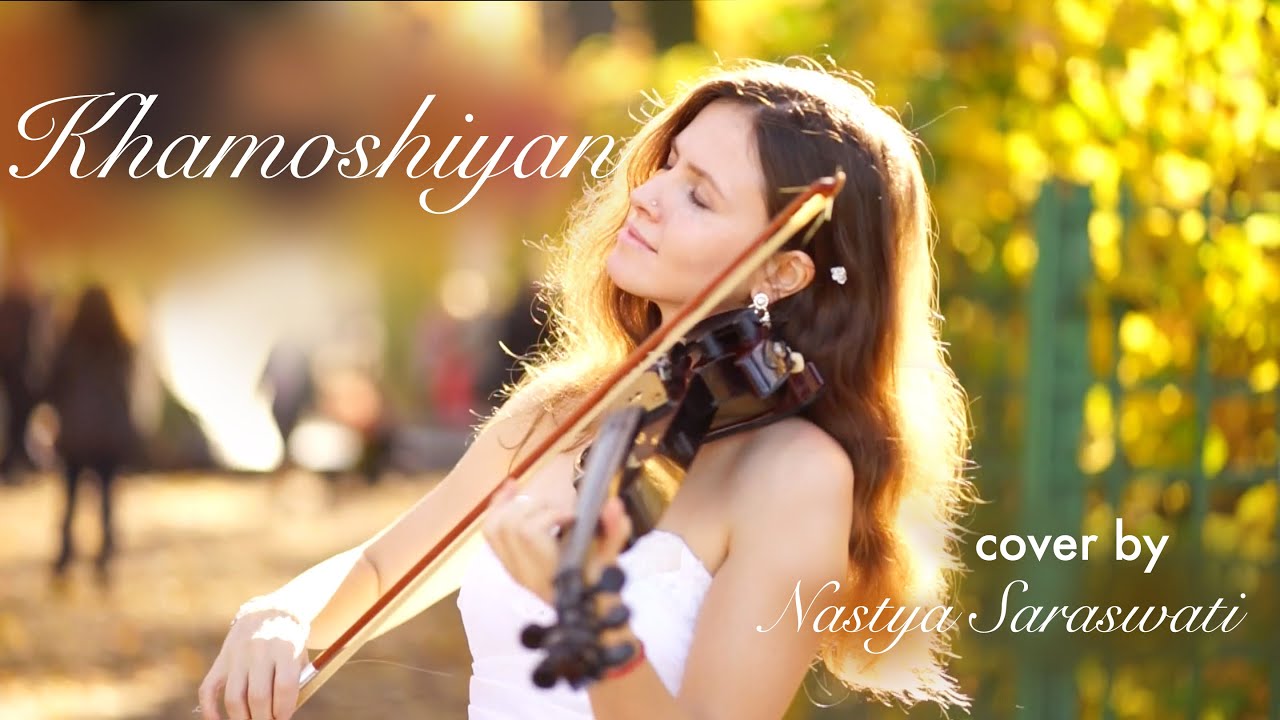
The Wheels of Raaga is a contemporary instrumentation album that applies "Raga Samay Chakra"—the cyclical time theory of ragas—to daily routines, using specific ragas to energize different times of day. In this project, violinist Nastya Saraswati performs Raga Bilawal, a morning raga composed by R Sanjay, designed to reconnect listeners with nature and establish a harmonious relationship between human consciousness and natural rhythms. The album celebrates womenhood in music by bringing together prominent female musicians to create music that integrates Ayurvedic and astrological principles of timing into accessible, contemporary classical music.
What Is the Raga Samay Chakra Theory?
At the heart of the Wheels of Raaga project lies an ancient principle of Indian classical music: that specific ragas possess inherent relationships to specific times of day and seasons. This is formalized in what the album calls "Raga Samay Chakra"—the Cyclical Time Theory of Ragas. Rather than treating Indian classical music as abstract or divorced from lived experience, this theory posits that ragas are tools for aligning human consciousness with the natural cycles that govern existence.
The cyclical time theory is not new; it is rooted in centuries of Indian music tradition and philosophy. However, the Wheels of Raaga project reframes it as a practical, contemporary practice. The album serves as a "tribute to daily routines"—acknowledging that listeners wake, work, rest, and sleep in structured patterns, and that ragas can be matched to these moments to deepen both the quality of the listening experience and the quality of presence within each part of the day.
How Does Raga Bilawal Connect to the Morning?
Raga Bilawal is designated as the morning raga in this project. According to the album's framing, "there is a day ahead but the moment is evolving." This suggests a particular psychological and energetic state: the morning is when potential emerges, when the mind is fresh and the body is transitioning from sleep to activity. Raga Bilawal provides what the project describes as a "connect to nature to an extent that we are unable to imagine the experience."
This phrasing is significant. It implies that the raga's effect operates beyond the intellectual or emotional—it reaches into a dimension of experience that conscious thought cannot fully grasp. The morning performance of Raga Bilawal is not merely pleasing to the ear; it is intended to re-establish the listener's connection with nature itself. After sleep, the individual is somewhat disconnected from the external world. Raga Bilawal, composed for this time, serves as a bridge between inner wakefulness and outer natural reality.
The raga's structure—its specific ascending and descending patterns (aroh and avaroh), its emphasized notes (vadi and samvadi), and its ornamentation (meend and gamak)—are calibrated to resonate with the frequency of morning consciousness. Different ragas possess different emotional and energetic signatures; Bilawal is bright, grounded, and initiating rather than introspective or melancholic.
The Violin as a Contemporary Medium for Classical Ragas
Nastya Saraswati's choice of the violin as her instrument for this raga is part of the album's contemporary approach. While Raga Bilawal is traditionally performed on instruments like sitar, sarod, or vocal performance, the violin offers particular advantages in a modern, global listening context. The violin has been integrated into Indian classical music for over a century and is capable of producing the microtonal inflections and continuous slides (the hallmarks of raga performance) with remarkable subtlety.
By presenting Raga Bilawal on violin, the Wheels of Raaga project makes the music accessible to a wider audience—people who may be unfamiliar with traditional Indian instruments but who have a relationship with the violin through Western classical music. This is not a compromise of authenticity; rather, it is a strategic integration of ancient music theory into contemporary instrumentation. The raga remains unchanged; only the vehicle of its expression shifts.
Saraswati's role as a featured musician also signals the album's commitment to celebrating "womenhood in music." The project explicitly brings together "the most energetic musicians around the globe" with emphasis on female performers. This reflects a broader movement in Indian classical music to center and amplify the contributions of women musicians, who have historically been marginalized in the formal concert and recording ecology.
Why Match Ragas to Daily Routines?
The Wheels of Raaga project assumes that music is not mere entertainment but a technology for aligning human biology and consciousness with natural cycles. This idea has roots in Ayurvedic medicine and classical Indian philosophy, both of which organize experience around cyclical time: the seasons, the hours of the day, the doshas (energetic principles), and the relationship between individual and cosmos.
When listeners engage with Raga Bilawal in the morning—at the moment it is designed for—they are told the experience will "bring energy in every part of the day and positive vibes to be around you throughout." This is not mysticism divorced from logic; it is the application of a coherent system. If a raga's internal structure mirrors the energetic signature of a particular time, then listening to that raga at that time creates resonance. The listener's nervous system, still transitioning from sleep, meets the musical structure designed for that transition, and the two attune to each other.
This approach transforms daily routine from mere repetition into an opportunity for conscious living. Rather than moving through the morning on autopilot, the listener has a tool—the raga—that anchors attention and intention to the specific qualities of that time of day.
The Album as Womenhood in Music Celebration
The Wheels of Raaga album is explicitly framed as "celebrating womenhood in music." Composer R Sanjay, concept creator Udaya.Kathiravan (Arrivan Isai), and performer Nastya Saraswati are all working to create what the project calls "a contemporary classic." The emphasis on assembling "the most energetic musicians around the globe" suggests an intentional curatorial choice to prioritize female voices and perspectives in a field—Indian classical music—where institutional power and visibility have historically been concentrated in male hands.
This celebration is not decorative. The female musicians brought together for Wheels of Raaga are not secondary performers; they are the primary artists delivering the vision. Nastya Saraswati's violin is the featured voice; her interpretation of Raga Bilawal is what listeners encounter. Her artistry and technical mastery are the medium through which the ancient raga theory reaches the contemporary listener.
The Practical Application: Advisory, Not Mandatory
An important note embedded in the album's documentation is this: "Period of ragas may be said to be only advisory and not mandatory." This caveat is significant. While Raga Bilawal is designed for the morning and has properties aligned with morning consciousness, listeners are not bound to encounter it only at dawn. The project respects that real life is less orderly than theory; people may listen to Raga Bilawal in the evening, or at night, or whenever they need the energetic signature it carries.
This flexibility prevents the system from becoming dogmatic. Instead, it offers a map while acknowledging that each person's journey will be unique. A listener might play Raga Bilawal during a late afternoon moment when they need renewed connection with nature and natural timing, even if the clock says 4 p.m. The raga remains a tool, deployed by consciousness according to need.
Where to Go From Here
To explore Raga Bilawal and the Wheels of Raaga project in full, listeners can access the album on major streaming platforms through the Arrivan Isai fanlink (https://arrivanisai.fanlink.to/WoRBilawal) or the official website (https://www.arrivanisai.com/bilawal). The project's theoretical foundation is explained in detail at https://www.arrivanisai.com/wheels-of-raaga-theory, where the cyclical time theory of ragas is unpacked with greater depth.
Those interested in the intersection of Indian classical music, contemporary instrumentation, and daily conscious practice will find Wheels of Raaga a cohesive offering. Listeners unfamiliar with Indian classical music but drawn to instrumental music for meditation, work, or presence-building will discover that Raga Bilawal on violin offers both aesthetic beauty and functional purpose—a tool for reconnection with nature available each morning, or whenever needed.