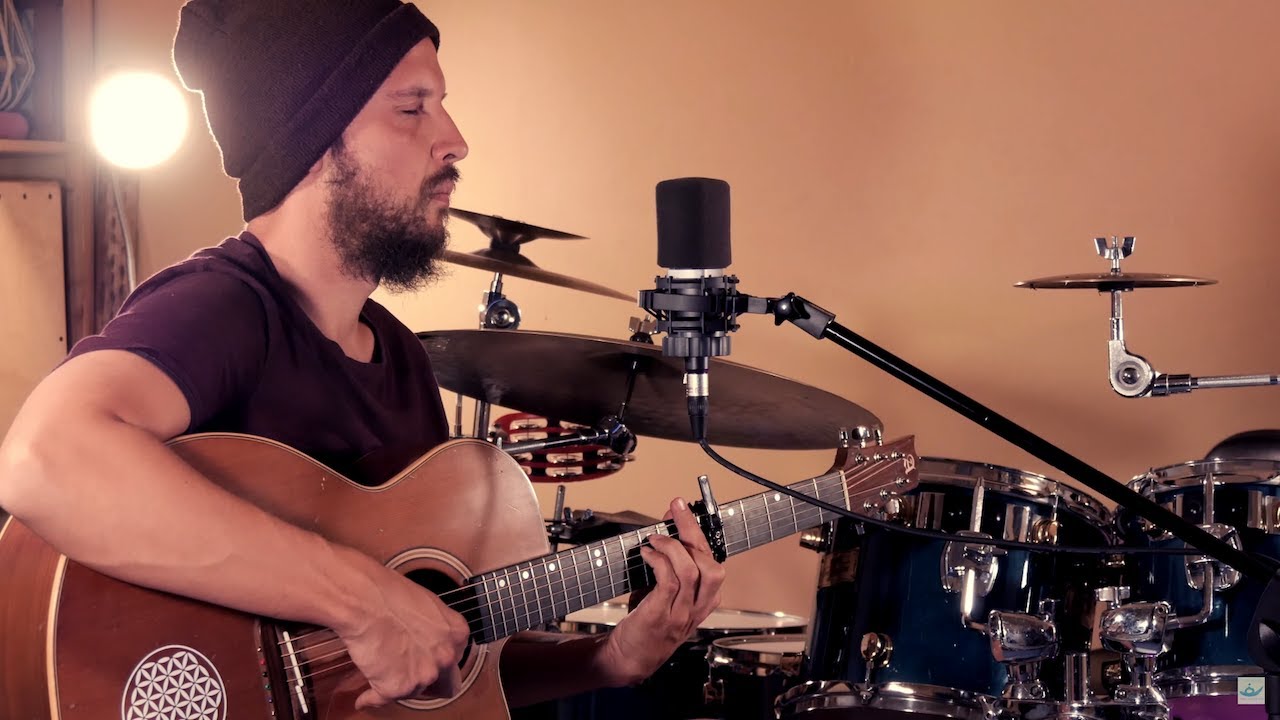
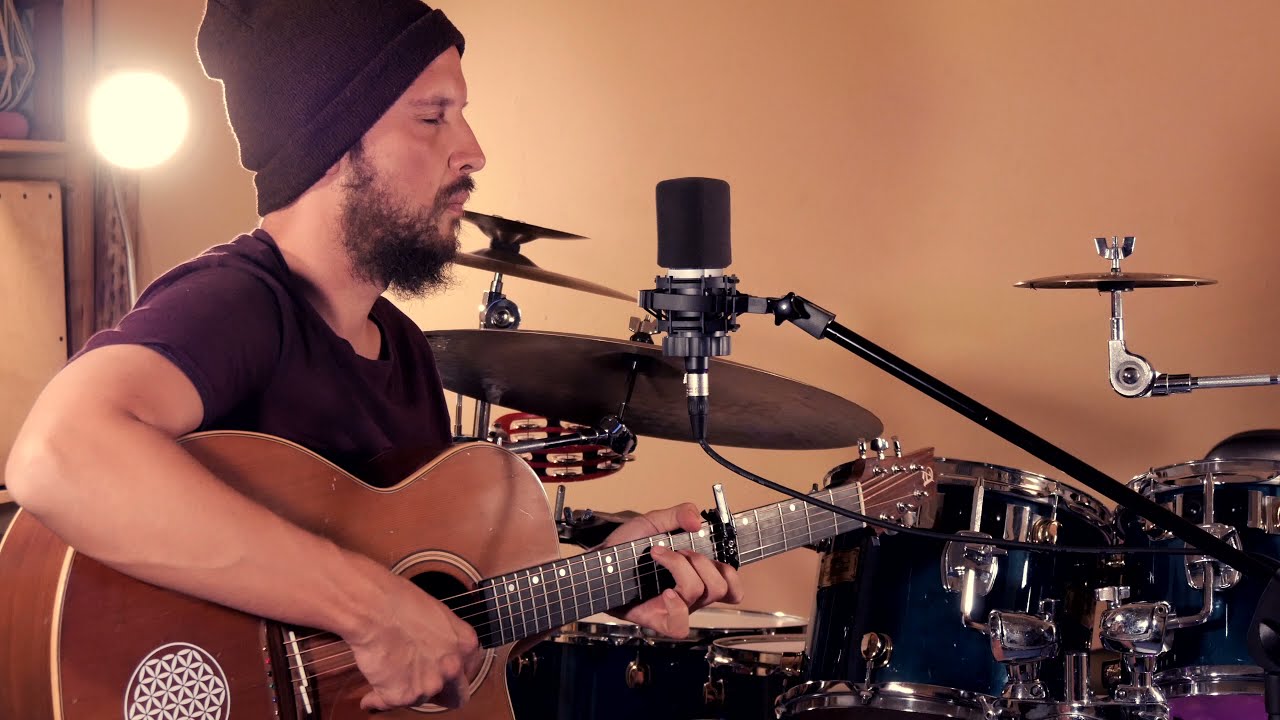
A voice emerges from stillness, steady and unadorned. Four lines of Sanskrit unfold—not rushed, not elaborated, but held like an offering. This is the Guru Mantra, and in its simplicity lies one of yoga and meditation's most potent invocations. The words acknowledge the teacher as divine principle: "Guru Brahma, Guru Vishnu, Guru Devo Maheshwara, Guru Sakshat Parabrahma, Tasmai Shri Gurave Namah"—the guru as creator, sustainer, and destroyer; the guru as the ultimate reality itself. Nirodha's acoustic recording strips away production, leaving only breath, voice, and the resonance of guitar, inviting listeners into the essential act of chanting itself.
What Is the Guru Mantra?
The Guru Mantra is not modern spirituality or New Age invention. It is embedded in the Sanskrit tradition and appears in classical tantric and yogic texts as a core practice of devotion and recognition. The mantra functions on multiple levels: it honors the lineage of teachers stretching backward in time; it acknowledges that true teaching transcends any single person; and it attunes the chanter to receive transmission. In many yoga schools, students chant this mantra at the opening or close of class as a gesture of respect and as a way to align themselves with an unbroken chain of practice.
The structure itself encodes wisdom. The first three lines invoke the guru in three primary forms—Brahma (the principle of creation), Vishnu (preservation and harmony), and Maheshwara (Shiva, transformation and dissolution). These are not separate from the guru; they are manifestations of what the guru embodies. The fourth line identifies "Guru Sakshat Parabrahma"—the guru as direct experience of the ultimate reality—and the final phrase, "Tasmai Shri Gurave Namah" (salutations to that blessed guru), completes the circle of recognition and surrender.
Why Does This Mantra Endure?
Mantras persist because they work. Repetition of syllables—particularly Sanskrit syllables, whose phonetic qualities were designed to resonate through the body and nervous system—creates a measurable shift in consciousness. The Guru Mantra does this while also serving a psychological function: it reminds the practitioner that growth, learning, and transformation require relationship and humility. In a culture that often prizes the isolated self, the mantra pulls attention toward interdependence and grace.
The mantra also transcends specific lineage. Whether sung in a classical yoga ashram, a Buddhist temple, a home meditation space, or through an intimate acoustic recording, the core work remains: repetition softens the mind, syllables attune the body, and the meaning settles into the bones. The guru principle itself—the teacher as mirror, catalyst, and embodiment of truth—is neither sectarian nor limited to one tradition.
The Power of Acoustic Kirtan
Kirtan—call-and-response chanting, often of mantras and sacred names—has traditionally been performed in community, with harmoniums, drums, and layered voices creating an immersive sonic environment. The acoustic approach, stripped to voice and guitar, makes a different choice. There is nowhere to hide; the singer becomes the instrument, and the listener is held in close proximity to the breath and intention behind each syllable.
Nirodha's recording emphasizes this intimacy. Recorded with what the artist describes as care to create "an intimate and transformative experience," the performance invites listeners to move beyond passive consumption and into active participation. A listener can sing along, meditate, or simply allow the sound to guide relaxation and presence. Guitar provides a harmonic anchor—a gentle frame that allows the voice to unfold without distraction. This is kirtan at its most essential: the marriage of sound and silence, of form and formlessness.
Acoustic Practice and the Return to Roots
There is a larger trend in meditation and spiritual music toward unproduced, intimate recordings. This reflects both spiritual intention and cultural hunger. In a world saturated with elaborate production and algorithmic sound design, a solo voice and acoustic guitar feel revolutionary—not because they are new, but because they represent a return. This is how mantras were taught and sung for centuries: one person to another, voice to ear, presence to presence.
The acoustic format also honors the mantra's original context. The Guru Mantra emerged from oral transmission, from teacher to student, in spaces of teaching and ritual. An acoustic performance recreates something of that lineage—not as nostalgia, but as fidelity to what the practice actually is. The guitar, a Western instrument, becomes a bridge, suggesting that this ancient blessing is not confined to a particular culture or era but can be carried into any time and place where someone is ready to receive it.
Singing the Mantra: A Practical Gateway
For those new to mantra or kirtan, the Guru Mantra offers an ideal entry point. The four lines are short enough to learn in minutes, profound enough to practice for a lifetime. Each repetition, whether silent or voiced, soft or strong, plants the invocation deeper into the nervous system and psyche. Over time, the boundaries between singer and song dissolve; the mantra becomes a constant quiet offering running beneath ordinary consciousness.
The act of singing—not just listening—engages the vagus nerve, regulates breath, and creates a felt sense of resonance in the body. This is why kirtan, even in acoustic form, is not merely intellectual or devotional; it is a somatic practice. The guitar drone (if sustained) serves as an anchor for the voice, much as the hum of a harmonium does, holding steady while the vocal melody moves within it.
Where to go from here
If the Guru Mantra calls to you, the path is simple: listen, repeat, and allow the syllables to work. Nirodha's recording is available on Bandcamp, offering a quality recording designed specifically for meditation and chanting along. You might sing it daily—at dawn, before practice, or as a closing invocation. You might chant it in silence, letting the words move through your mind without sound. You might explore recordings by other kirtan artists and see how different voices and musical settings shift the experience. And if the mantra resonates, investigate the larger tradition: the yoga lineages that emphasize guru-tattva (the principle of the teacher), the tantric texts that discuss how syllables and breath reshape consciousness, or the living teachers who embody this teaching in their own presence. The Guru Mantra is an open door—one that has welcomed millions of practitioners across centuries and continues to do so, through voice, guitar, and the simple power of sacred sound.