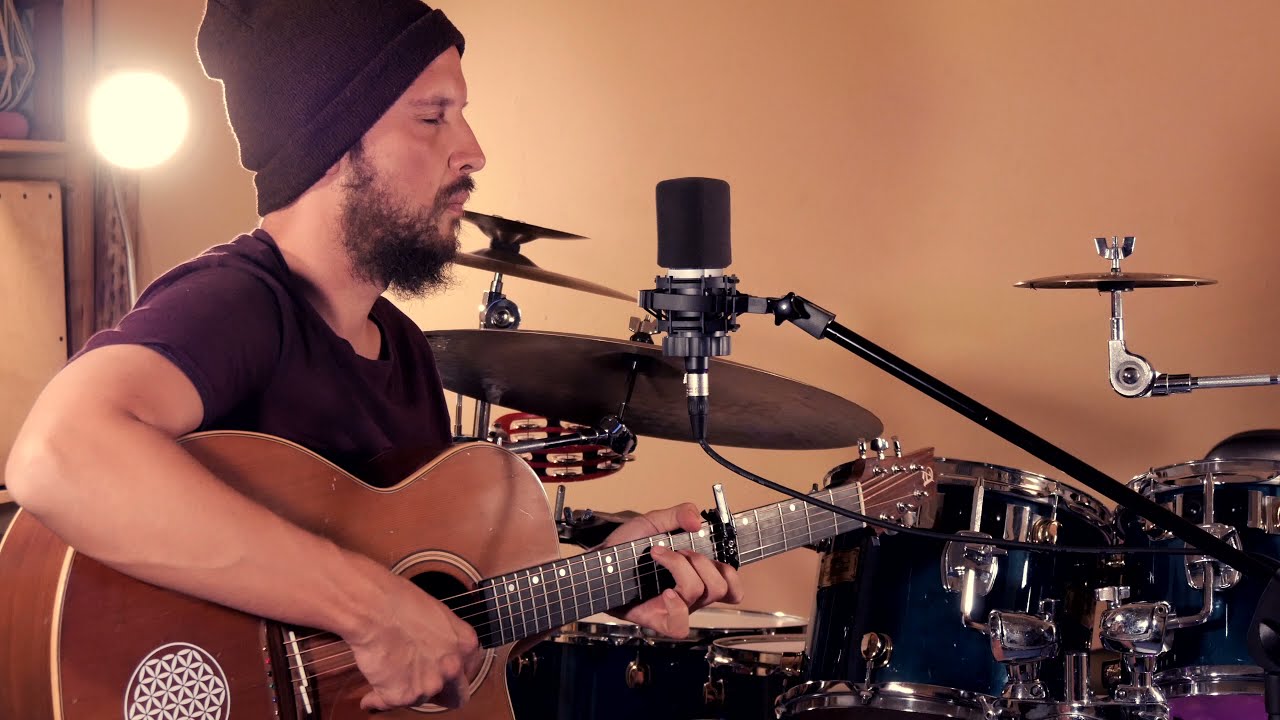
A single mantra, voice and guitar, six minutes. Not a playlist, not ambient background—a specific offering, recorded at OMM Studios in September 2021, designed for exactly this: deep relaxation, meditation, spiritual practice, or sleep. Nirodha's rendition moves through silence with intention, each repetition a small knot untying. Contemporary meditation seekers have grown weary of endless algorithmic playlists and generative soundscapes; they're moving instead toward specificity—dedicated mantra recordings offered as complete practices in themselves, not segments of longer mixes. This shift reflects a hunger for intentionality in how we engage with sacred sound, and how precision itself becomes a path.
Why Contemporary Seekers Are Choosing Specific Mantras Over Playlists
The move from endless meditation playlists to dedicated mantra recordings reflects something deeper than aesthetic preference. It signals a hunger for intentionality in spiritual practice. When a recording is titled and purposed—"this mantra, this arrangement, this exact length, for this particular state of being"—it invites a fundamentally different kind of listening.
You're not drifting passively into sound. You're showing up. You're agreeing to a specific encounter. The description offered for this piece is remarkably precise: "perfect for deep relaxation, meditation, spiritual practice, or sleep." These aren't vague marketing terms; they're specific states a listener might seek. The recording isn't designed to fill background space or serve as ambient texture for work. It's designed to be a container for transformation.
This precision matters because meditation itself requires intention. The body doesn't descend into stillness passively. It requires an offering—a focus, a sound, a practice to return to when the mind fragments and fragments again. An endless meditation playlist gives the mind nowhere to genuinely land; it drifts forever in a field of similar sounds. A six-minute mantra recording gives the mind a defined shape to hold. It becomes a practice, not a stream.
Contemporary seekers are experiencing this difference acutely. After years of algorithmic recommendations and infinite playlists, many listeners report a kind of fatigue—not with meditation itself, but with the paradox of unlimited choice that actually narrows genuine encounter. One artist, one mantra, one recording chosen intentionally, becomes more powerful than a thousand options accessed without thought.
The Significance of Recording at a Specific Time and Place
That this recording was made at "OMM Studios, September 2021" is worth noting. It wasn't generated algorithmically. It wasn't synthesized. A human artist went to a studio during a specific moment in time and recorded voice and guitar as an offering. This specificity adds weight. It's not content; it's a document of intention.
The studio setting—as opposed to a field recording or a live capture—suggests care and preparation. The artist chose the conditions, the time, the sonic environment. This deliberation transfers to the listener. You're not getting a casual take; you're receiving something prepared with attention to detail.
Why Guitar Transforms How We Encounter Sacred Sound
The instrumental choice here is quietly significant. Mantra traditions have long woven sacred chants with specific instruments—the tabla's rhythmic pulse, the harmonium's droning foundation, the drone as an unchanging sonic anchor, silence itself as a partner to the human voice. Guitar suggests something different: a contemporary artist working within a sacred form while bringing it into a sonic language many Western listeners instinctively recognize and respond to.
This is not dilution or appropriation. This is translation in the truest sense. A listener who has never encountered a harmonium but knows guitar can enter the same meditative state through familiar instrumentation. The "gentle sound of guitar," as described in the piece, becomes a bridge—honoring the mantra's sacred lineage while making it accessible to a contemporary ear trained on Western music. The sacred remains sacred. The practice remains intact. The form evolves to meet listeners where they actually are.
This matters because it suggests that sacred sound in the 2020s doesn't require purity of form. It requires precision of intention. A guitar becomes a vehicle for the same thing the traditional harmonium carries: steady presence, the human voice held and amplified, a guide into interior stillness.
The Power of a Bounded Practice
There's particular power in the form itself. Longer meditation music—the hour-long drift, the three-hour soundscape, the algorithm's endless suggestion chain—invites passivity. You fade into it and lose awareness of structure. When did it begin? When will it end? Where am I within it? These questions dissolve in infinite sound.
A six-minute mantra asks for presence. It has a distinct beginning, middle, and close. You know where you are when you press play. You know where it ends. This boundary is liberating, not constraining. You can complete a practice. You can know what "finished" feels like.
This bounded form is also intimate. The recording isn't orchestral or vast; it's close to the ear. You and the voice and the guitar, captured at OMM Studios in a specific moment. No additional layers, no production flourish, no attempt to sound like multiple musicians. Just the essential elements: the mantra, the voice offering it, the guitar holding the space. For seekers working with meditation, spiritual practice, or using sound to facilitate sleep, this minimalism becomes generosity. You get the whole thing. You can complete it. You can return to it tomorrow knowing exactly what you're returning to. There are no surprises, no sudden sonic shifts—just deepening familiarity over time.
The six-minute length also respects the reality of modern life. It's not aspirational—"I'll meditate for an hour"—and then abandoned. It's achievable. Six minutes can happen. Morning, evening, before bed, in a moment of anxiety—six minutes is a real commitment that most people can actually keep.
How Specificity Itself Becomes Practice
The existence of this recording—and others like it, circulated through independent labels like Organic Meditation Music—signals a turn in contemporary spiritual practice. Not away from tradition, but toward precision within it. Listeners aren't searching for better algorithms or more options. They're searching for specific mantras that resonate, specific teachers whose voices they trust, specific arrangements that open something in their own interior landscape.
Over days or weeks of listening, a recording becomes less a song and more a trusted friend—something that holds your attention and your trust. A deep meditative practice isn't built on variety; it's built on return. You listen to the same mantra again and again until it opens. The third time is different from the first. The tenth time carries the weight of those nine previous encounters. You're building a relationship with the sound, not collecting experiences.
This is why a dedicated recording, available on Spotify and through the artist's channels, can matter more than a hundred playlist options. It's not just about audio quality or production; it's about the possibility of depth. You can go deep with one thing.
What the Recording Promises—And What That Reveals
The language surrounding this recording is revealing, pointing listeners toward specific states rather than generic wellness:
"Perfect for deep relaxation, meditation, spiritual practice, or sleep." "Let the gentle sound of guitar and the sacred mantra guide you into a state of calm and inner peace."
These aren't generic wellness claims. They're specific states. Relaxation is not the same as sleep; meditation is not the same as relaxation. Spiritual practice has a different arc and intention than any of these. The recording is positioned as having multiple doorways—different listeners will use it for different purposes—but all of those purposes point toward interior stillness and peace.
The verb "guide" is also significant. The mantra and guitar aren't just there; they're actively guiding. There's directionality. An intention to move you somewhere. This is different from ambient music, which aims to create an environment but doesn't necessarily have a destination.
Where to Go From Here
Nirodha's work is available on Spotify and through Instagram (@nirodhamusica) and Facebook. The immediate practice is simple: listen without distraction. Set aside six minutes without the phone, without the task list, without simultaneous engagement with other screens. Just the mantra, the guitar, and your own interior response.
If you're drawn to kirtan and mantra-based meditation music, follow Nirodha for new releases. The artist continues to offer meditation and healing soundscapes designed for the same focused practice—complete experiences rather than infinite scrolls.
The deeper work, though, is this: let one mantra teach you. Return to it. Not because it's novel, but because it's known. Watch what shifts over time. In a world of infinite choice, choosing one thing deeply may be the most radical form of practice available.