Visionary art is a form of expression that depicts consciousness, spiritual dimensions, and the interconnected nature of reality that exist beyond ordinary perception. Through intricate anatomical renderings, symbolic imagery, and luminous detail, visionary artists like Alex Grey create visual maps of inner experience—revealing energy systems, chakras, and the unified field underlying all existence. This art form bridges scientific observation with mystical insight, functioning as both personal documentation of non-ordinary states and a shared language for collective awakening.
What Is Visionary Art?
Visionary art represents a distinct category of artistic expression that prioritizes the depiction of inner experience, non-ordinary consciousness, and dimensions of reality that exist beyond everyday perception. Rather than documenting the external world as it appears, visionary artists create visual representations of what they perceive while in altered states of consciousness—through meditation, psychedelic experience, intuitive insight, or spiritual vision.
The distinguishing feature of visionary art is its commitment to authenticity and precision in rendering these non-consensus experiences. Visionary artists approach their work with the rigor of scientific illustrators, translating subtle energetic and psychological phenomena into meticulously detailed visual form. This marriage of technical skill with metaphysical content creates images that function simultaneously as art objects, spiritual teaching tools, and maps of consciousness.
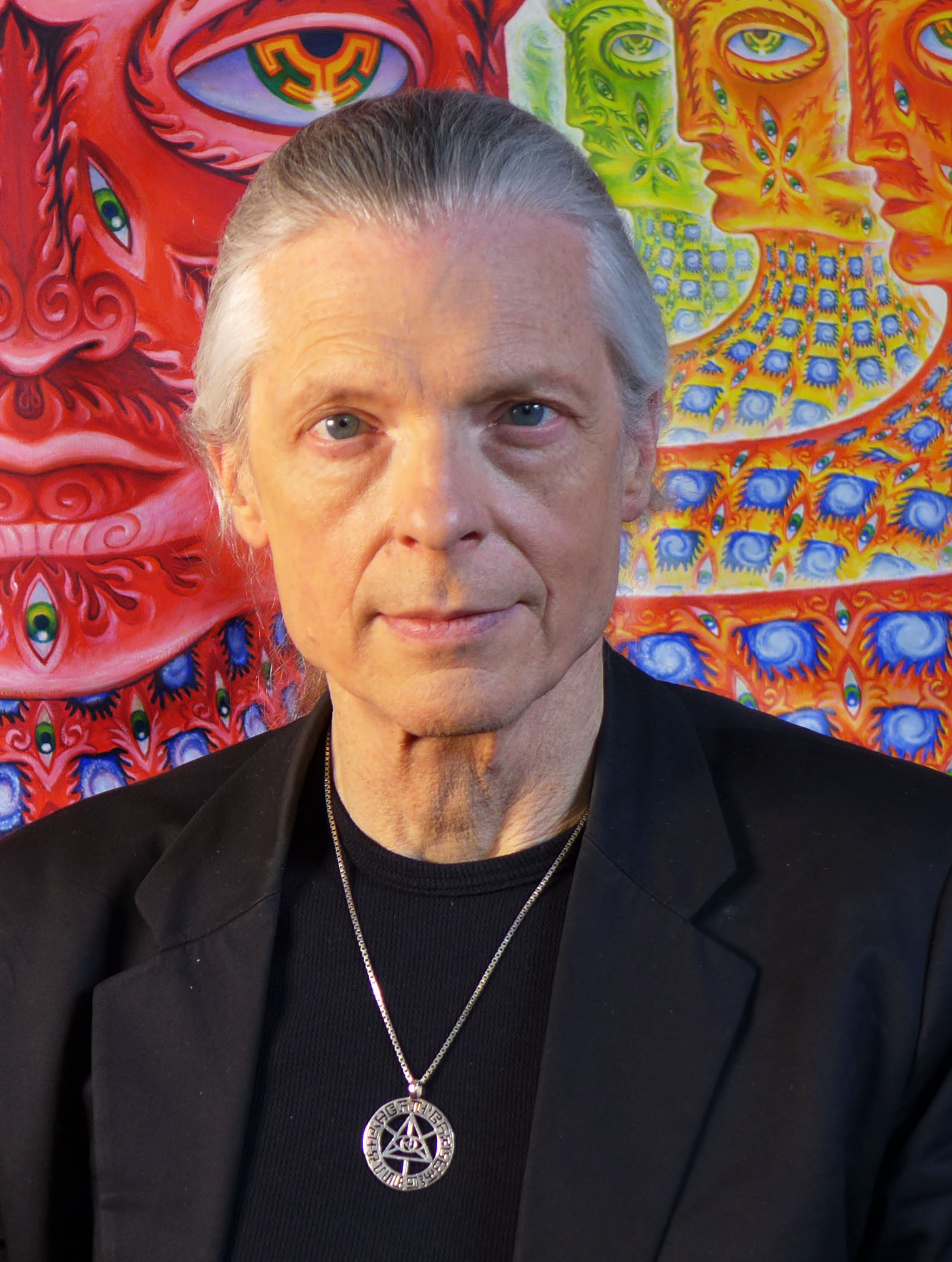
Alex Grey, one of the most recognized contemporary visionary artists, develops this approach through densely layered imagery that reveals multiple dimensions within a single work. His paintings often present the human body not as solid matter but as a luminous, interconnected web of energy, anatomy, and consciousness. Each work invites extended contemplation, rewarding viewers with new details and insights upon repeated viewing.
How Does Visionary Art Reveal Hidden Dimensions of Reality?
Visionary art operates on the principle that consciousness itself has structure and topology—that inner experience follows patterns and pathways that can be accurately rendered in visual form. When visionary artists depict chakras, energy channels, or fields of light surrounding the body, they are not inventing metaphorical decoration but documenting what they directly perceive in non-ordinary states.
This documentation serves a crucial function: it externalizes and validates experiences that might otherwise remain subjective and incommunicable. A person who has encountered a state of expanded consciousness or perceived the energetic anatomy of the body may feel isolated, uncertain whether their experience was real or merely hallucinatory. Visionary art provides a shared visual vocabulary that confirms these experiences are common, recognizable, and worth serious attention.
The detailed, scientific approach visionary artists take amplifies this function. By rendering anatomical structures alongside energetic visualizations—showing both the nervous system and the subtle energy channels, both blood vessels and luminous flows—artists like Grey demonstrate that these are not contradictory ways of seeing but complementary perspectives on the same underlying reality. The body is simultaneously mechanical and conscious, material and energetic, individual and interconnected.
What Is the Relationship Between Visionary Art and Spiritual Awakening?
Visionary art functions as a catalyst for consciousness expansion. Encountering these images can trigger recognition in viewers—a sense that what is depicted resonates with their own deepest intuitions or latent experiences. The specificity and beauty of the work overcome skepticism and invite contemplation.
More fundamentally, visionary art expresses the central realization of many spiritual traditions: that individual consciousness is not isolated but interwoven with a larger field of awareness. The imagery of interconnection—showing how all beings share the same underlying patterns, how energy flows through all life, how human consciousness participates in a unified field—communicates this recognition directly to the viewing consciousness.
When a person gazes at visionary art depicting the luminosity and interconnection within and around the human form, they are not merely looking at a picture. They are being offered a mirror of their own deepest nature. The art suggests: this is what you are; this luminosity, this wholeness, this connection to all things is your actual condition.
How Does Anatomical Precision Serve Spiritual Expression?
A distinguishing characteristic of Alex Grey's work is the combination of scientific accuracy with visionary content. His paintings demonstrate detailed knowledge of human anatomy—the nervous system, circulatory system, muscular structure—rendered with the precision of medical illustration. Simultaneously, these anatomical systems are depicted as glowing with light, surrounded by halos of energy, and interconnected with symbol and consciousness.
This fusion is not accidental. The anatomical precision serves multiple purposes. First, it grounds the spiritual vision in observable fact. The nervous system is real; the circulatory system is real. By rendering these with accuracy, the artist asserts that the visionary dimensions are not separate from physical reality but inherent within it. Spirit is not opposed to matter but its deepest truth.
Second, anatomical accuracy invites scientific contemplation. A viewer educated in anatomy can trace the pathways of sensation through the nervous system, understand the flow of blood through the heart, and recognize the familiar structure beneath the visionary imagery. This familiarity creates a bridge. The viewer can think: "I know this structure; I have studied this anatomy. And now I see it glowing with a light I had not noticed before. What does this light represent?"
Third, the meticulous rendering of every detail—every nerve ending, every capillary, every layer of tissue—expresses reverence. The level of care and attention given to each element communicates that the subject matter is sacred, worthy of profound respect and sustained study.
What Role Does Symbol Play in Visionary Art?
Visionary art does not limit itself to literal depiction. It incorporates symbol, mandala, geometric form, and archetypal imagery to communicate dimensions of meaning that cannot be captured by realistic representation alone. These symbolic elements function as a language of consciousness itself—patterns and forms that appear across mystical traditions and in the visions of people across cultures who have no prior knowledge of those traditions.
The mandala, for instance, appears repeatedly in visionary art and across spiritual traditions. It represents wholeness, the integrated self, the cosmos. When an artist includes mandala forms in a rendering of the human body, they are asserting that within each person is a complete universe, a whole cosmos. The geometric precision of mandala forms conveys order and intelligence—suggesting that consciousness is not chaotic or random but structured, organized by deep patterns.
Similarly, the depiction of light, halos, and luminosity serves symbolic function. Light represents consciousness, awareness, the transcendent dimension. By surrounding and interpenetrating the body with light, visionary art visualizes the thesis that consciousness is not produced by the body but pervades and animates it. The body appears as a luminous presence within a larger field of light.
How Does Visionary Art Function as Personal Documentation?
For the artist, creating visionary work serves as a form of personal exploration and testimony. When an artist like Alex Grey creates detailed renderings of visionary experiences, he is documenting his own direct perception, his own encounters with consciousness in its non-ordinary forms. The work becomes a record—here is what I have seen; here is what appears when perception expands beyond normal constraints.
This personal documentation has authenticity and authority that no theoretical description can match. A person reading a philosophy book may wonder: Is the author actually describing something real, or merely constructing an intellectual edifice? But an artist who has spent months rendering the details of what he perceived, who has put his skill and reputation behind the accuracy of the depiction, testifies to something more concrete. He is saying: I have looked into the depths, and here is what I found.
The work also serves a deeper personal function for the artist. The act of rendering these visions in precise visual form constitutes a form of meditation and integration. It is a way of understanding and consolidating what was experienced in non-ordinary consciousness, of bringing those insights into ordinary awareness and expressing them in terms that the rational mind can engage with.
What Makes Visionary Art Relevant Beyond Spiritual Communities?
While visionary art emerges from and serves spiritual traditions, its relevance extends far beyond circles of explicitly spiritual seekers. Contemporary consciousness studies, neuroscience, and psychology increasingly validate the central insights that visionary art expresses.
Neuroimaging research reveals that consciousness correlates with patterns of neural activity throughout the body, that the brain is not a isolated processor but deeply integrated with the nervous system, the heart, the gut, and every cell. While scientists describe this in functional terms and artists describe it in visionary terms, both are pointing to the same underlying reality: consciousness is distributed, embodied, and interconnected.
The contemporary crisis of meaning and connection—the epidemic of depression, anxiety, and alienation in developed societies—stems in part from a distorted understanding of human nature. People are taught to see themselves as isolated minds trapped in inert bodies, separate from nature and from each other. Visionary art directly contradicts this fragmentary vision, offering instead an image of radical interconnection, of consciousness as the fundamental nature of reality, of the body as sacred and luminous.
In this sense, visionary art is not escapist fantasy. It is a corrective vision, a remembering of what is actually true about existence. It offers not only beauty but orientation—a way of understanding reality that is both scientifically coherent and spiritually sustaining.
Where to Go From Here
To deepen engagement with visionary art, begin by sustained contemplation of individual works. Choose an image—whether from Alex Grey or other visionary artists—and spend extended time with it. Notice what draws your attention. What colors, forms, and symbols capture your awareness? What emotional or intuitive responses arise?
Explore the anatomical dimensions. If you have knowledge of anatomy, trace the systems depicted. Recognize that the visionary imagery is not separate from but expressive of these real structures. Consider how your own body, when perceived more subtly, might reveal these qualities of light and interconnection.
Study the traditions that inform visionary art—Tantric Buddhism, Hinduism, Shamanism, Alchemy, Western Esotericism. Recognize that visionary artists are not inventing new symbols but rendering perennial symbols that have appeared across cultures and centuries. This recognition links you to a continuous tradition of consciousness exploration.
Most importantly, investigate your own consciousness directly. Visionary art serves as an invitation to perception. When you encounter a visionary image, you are being invited to ask: Is this real? Can I perceive this myself? What would it mean if consciousness actually had this structure and quality? From there, contemplative practices—meditation, breathwork, mindful inquiry—become pathways toward direct verification of what visionary art depicts.