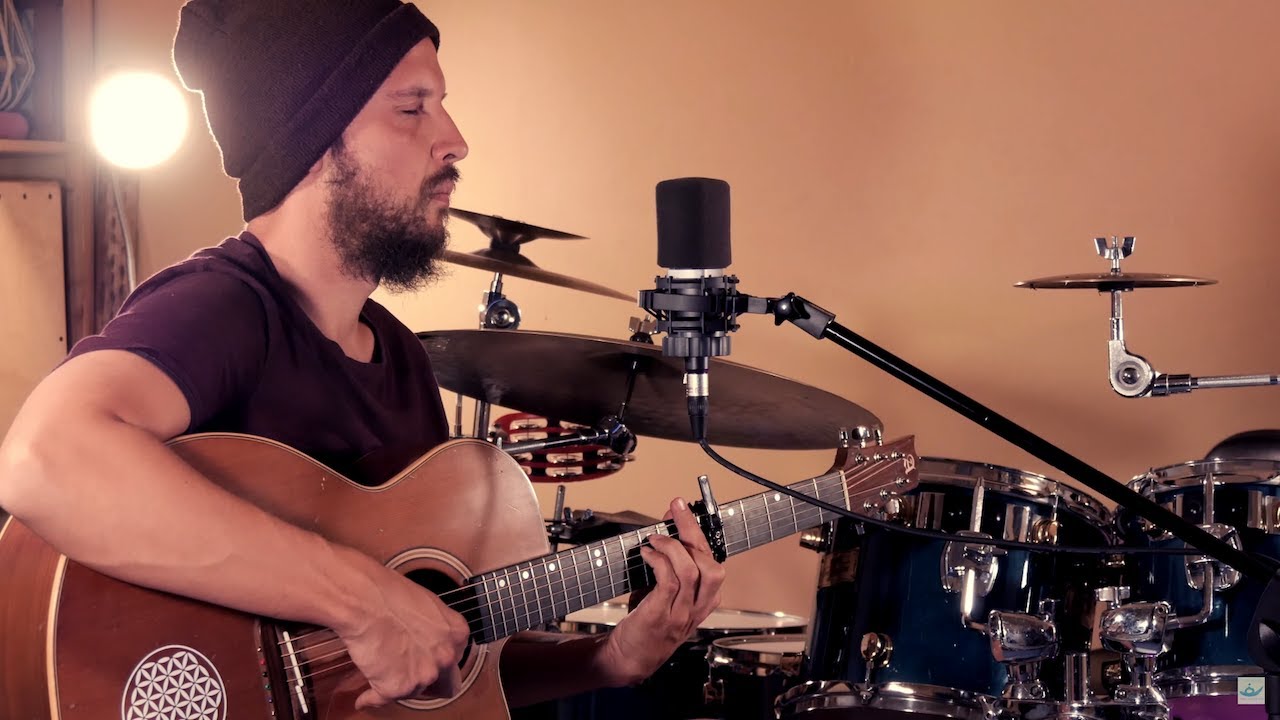
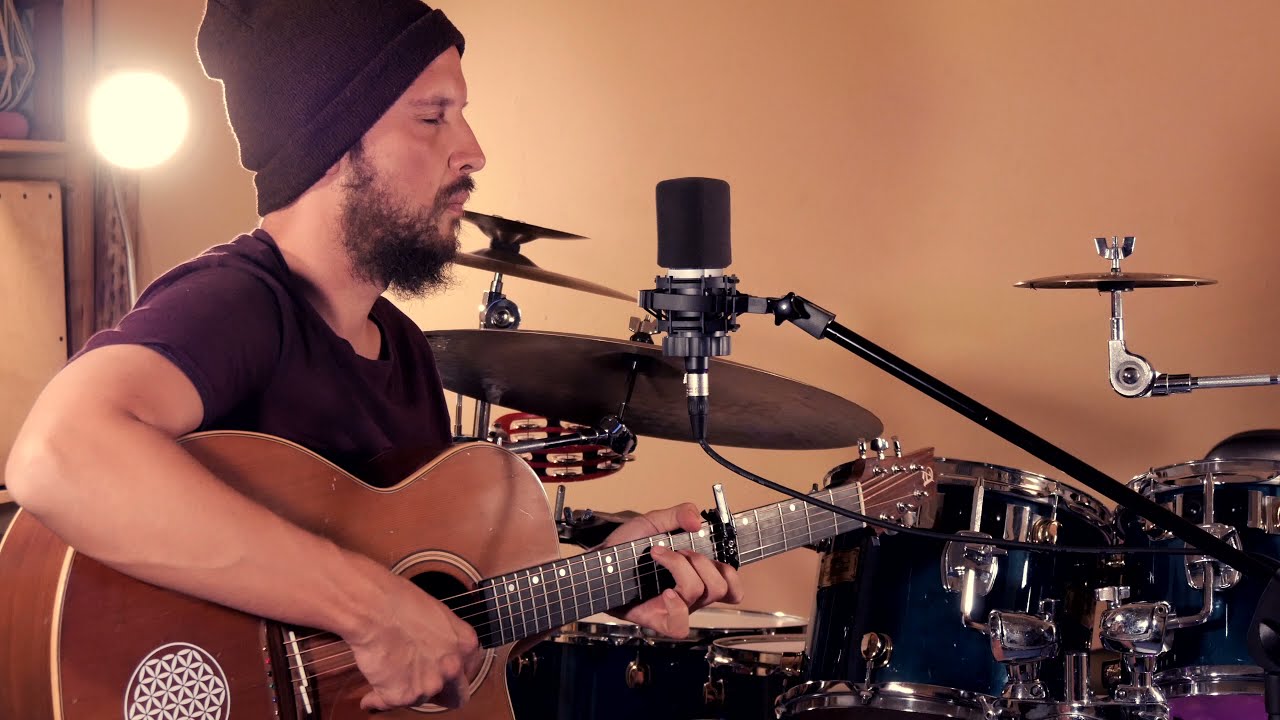
"Purnamadah Purnamidam / Purnat Purnamudachyate / Purnasya Purnamadaya / Purnameva Vashishyate." These Sanskrit lines—"That is complete, this is complete, from completeness comes completeness, if completeness is taken from completeness, only completeness remains"—are the opening verses of the Isha Upanishad, one of humanity's oldest philosophical texts. When Nirodha composed and produced this mantra as meditation music, the artist wasn't simply recording ancient words; they were creating a sonic container for a 3,000-year-old riddle about infinity, designed to be experienced through the nervous system as much as the intellect. What emerges is both timeless and urgently contemporary—a bridge between the Vedic philosophers and anyone meditating in a modern room, seeking relief from the constant sense of incompleteness that defines contemporary life.
The Isha Upanishad is the shortest and, by many measures, the most radical of the Vedantic texts. Unlike the sprawling ritualism of the Vedas themselves, the Upanishads are philosophical dialogues that ask the foundational questions: What is real? What persists through change? Who is the "I" that observes? Composed sometime between 800 and 200 BCE—exact dating remains contested among scholars—the Isha Upanishad opens not with invocation but with declaration. Its first verse is the Purnamadah mantra, the foundation stone of non-dual philosophy.
The word "Isha" means "lord" or "master," but the Upanishad uses it to describe the ultimate principle underlying all existence—not a bearded deity dispensing favors from above, but consciousness itself, the witnessing presence behind all phenomena. Every verse that follows spirals outward from this opening, exploring what it means to live as if completeness is the intrinsic nature of reality, not something earned or achieved. For nearly two millennia, Hindu philosophers, yogis, and meditation practitioners have used this text as a cognitive and contemplative map.
Breaking down the mantra line by line reveals the philosophical architecture: "Purnamadah" (that which is far, transcendent) is complete; "Purnamidam" (this which is here, manifest, material) is complete; "Purnat Purnamudachyate" (from completeness, completeness is born); "Purnasya Purnamadaya" (if you remove completeness from completeness); "Purnameva Vashishyate" (only completeness remains). The word "purna" means full, whole, complete, infinite—it is the completeness of being itself.
What strikes practitioners immediately is the refusal of hierarchy. Many spiritual systems teach a ladder: matter is dense and inferior, spirit is subtle and superior, and the goal is to escape one realm for the other. The Isha Upanishad says otherwise. Both the transcendent and the manifest are complete. Both are whole. There is no escape route, because there is nowhere to escape to. When you subtract infinity from infinity, you don't get zero—you get infinity. The mathematics of consciousness doesn't obey Euclidean logic.
This maps directly onto Advaita Vedanta, the non-dual philosophical school that would crystallize centuries later through the teaching of Adi Shankara. If all is one consciousness (Brahman), then separation is illusion—but illusion doesn't mean unreal in the sense of "nonexistent." The manifest world isn't inferior; it's the same consciousness wearing different masks, speaking different languages, inhabiting different bodies. You aren't less complete than the universe; you are the universe, temporarily convinced of your separateness.
In 2019, when Nirodha released this composition, the world was not short on anxiety. It still isn't. The fragmentation of attention across multiple devices, the economic precarity for millions, the digital panopticon, the climate crisis, the constant comparison-machine of social media—all of these feed a pervasive sense of incompleteness. We're told we lack something: the right body, the right income, the right partner, the right ideology, the right amount of success. An entire economy is built on this lack. Spiritual consumerism exists precisely because we feel incomplete and believe some product—a retreat, a supplement, a course, a book—will finally fill the gap.
The Purnamadah mantra offers a radically different premise: you are already complete. The world is already complete. There is no gap to fill, no deficiency to overcome. This isn't optimism (which implies things could be worse); it's a statement about the fundamental structure of existence. When this mantra is encountered regularly in meditation, something neurological begins to shift. The nervous system's baseline assumption starts to rewire. Over time, the seeking can settle. The scrambling can ease. Not because you achieved something, but because you stopped accepting the premise that achievement was necessary.
There's a long tradition of mantra musicalization in Hindu practice. Kirtans—devotional chants sung in temples, ashrams, and homes—have been performed for centuries, often with harmonium, mridangam (drum), and human voice creating layers of sound and rhythm. Sacred sound has its own technology. The Sanskrit language itself is considered to have vibratory properties; the vowels and consonants are said to activate different chakras and subtle energy channels within the body. A mantra isn't merely meant to be understood as an idea; it's meant to be experienced through repetition, through embodied vocalization, through sound waves reshaping the inner ecology.
When a mantra is set to composed music—as Nirodha has done—something additional happens. The music provides a container, a scaffolding, that can make the words accessible to people who might not have a practice of chanting, might not speak Sanskrit, might not consider themselves "spiritual" at all, but who need beauty as much as they need meaning. The music also extends the mantra's reach into the nervous system through channels that pure speech cannot access; rhythm and melody trigger physiological relaxation responses, vagal activation, and states of receptive awareness that intellectual understanding alone cannot reliably produce. A trained meditation practitioner might drop into non-dual awareness through conceptual study; someone listening to this piece might arrive at the same place through the gateway of sound, through the gateway of beauty.
The description of this work as "organic meditation music" suggests an approach that honors the mantra's philosophical source while creating room for contemporary sensibility. Not a synthesizer-heavy reinterpretation that transforms the mantra into ambient pop, but something that feels like it has grown organically from the teaching itself, something that lets the Sanskrit breathe.
Purnamadah works best not as background music but as intentional meditative practice. This is worth distinguishing: passive listening (the piece playing while you work or clean) has its place, but the mantra is an invitation to something different—directed attention, the meditation itself. A suggested practice: find a quiet space, sit comfortably, and allow the mantra's words and music to wash over you without trying to analyze or intellectually understand them. When the mind wanders—as it inevitably will—gently return your attention to the sound, the vibration, the words. Some listeners find it helpful to follow along with the Sanskrit text, noticing where the English translation illuminates the meaning. Others prefer pure sonic immersion, letting meaning arise beneath thought.
Over multiple listenings, the mantra's significance often shifts in ways that surprise. On first hearing, you might catch only melody and rhythm. On the tenth listening, something in the philosophy might suddenly land, seeming to have appeared from nowhere. On the fiftieth time through, you might notice that the distinction between the music and your own awareness has begun to dissolve, and you can no longer quite tell where the mantra ends and the listener begins. This is the technology working as intended—not as entertainment or passive consumption, but as a direct transmission of understanding.
If Purnamadah resonates, the next steps might include exploring the full text of the Isha Upanishad itself—translations by Swami Vivekananda and Ramakrishna Paramahamsa offer accessible entry points, as do contemporary interpretations by teachers like Rupert Spira and Adyashanti. You might investigate other kirtan artists who work with traditional Sanskrit texts, exploring the living tradition of mantra in sound. You could explore other Upanishadic mantras—"Om Namah Shivaya," "So Hum," "Aham Brahmasmi"—through both chant and meditation music. Some practitioners find it valuable to study the philosophical lineage itself, understanding how Advaita Vedanta developed and what it offers to contemporary consciousness.
Most fundamentally, the mantra invites you to test its claim through direct experience. Is there any place, any moment, any circumstance in which you are not already complete? The only honest way to know is to sit, listen, and discover for yourself whether completeness is something you must achieve or something you must finally stop denying.