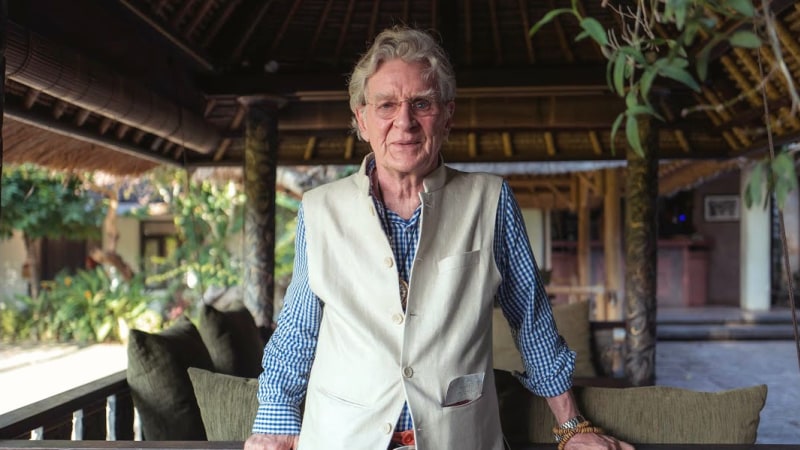
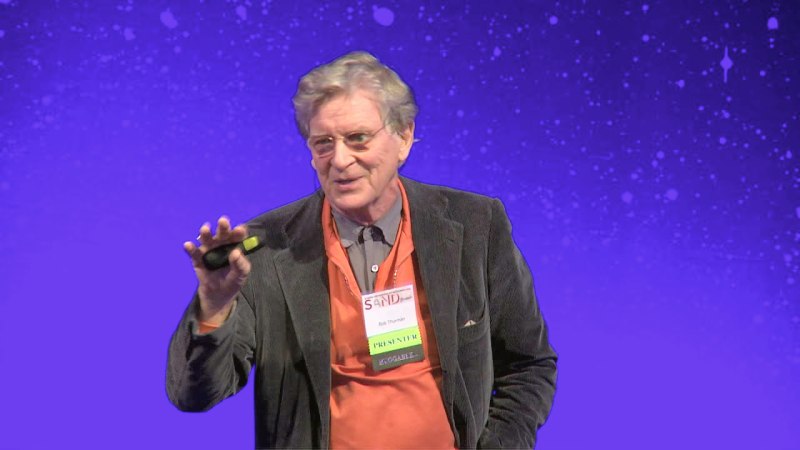
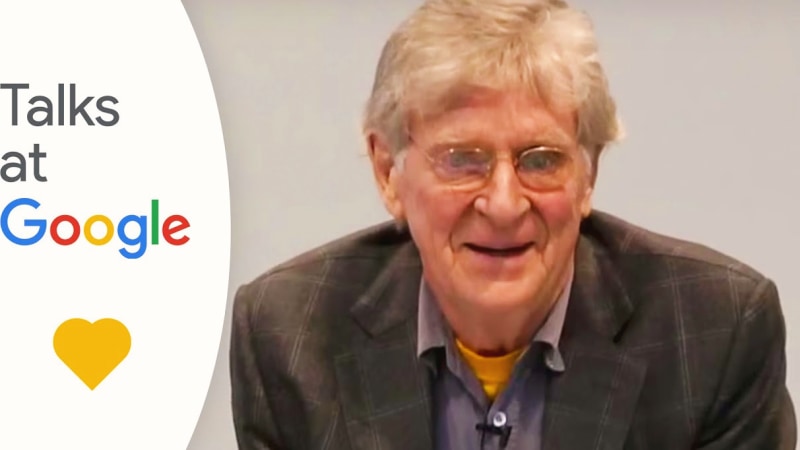
Robert A.F. Thurman is a Buddhist scholar, author, and activist recognized for bringing Tibetan Buddhism into American intellectual and contemplative life. He co-founded Tibet House US, a cultural preservation and education center, and Menla, a retreat center in the Catskill Mountains of New York, both designed to transmit Tibetan Buddhist teachings and practice to Western audiences. The first American to be ordained as a Tibetan Buddhist monk by the Dalai Lama in 1964, Thurman has spent more than five decades translating, teaching, and interpreting the philosophy and practice lineages of Tibet.
Thurman's work draws from the Gelug, Nyingma, and other Tibetan Buddhist schools, with particular focus on Dzogchen, Vajra Yoga, and Pure Land teachings. Unlike many Western teachers who emphasize a single tradition, Thurman moves fluidly across Tibetan lineages, grounding his instruction in both scholastic rigor and contemplative practice. He integrates classical Buddhist philosophy with contemporary issues, arguing that Tibetan Buddhism offers frameworks for environmental healing, social justice, and cross-tradition dialogue. His teaching style combines textual scholarship with accessible storytelling, making esoteric Vajrayana and Dzogchen teachings available to lay practitioners.
His books include Why the Dalai Lama Matters, a political and spiritual defense of Tibetan autonomy; Wisdom Is Bliss, a guide to Tibetan Buddhist philosophy; and The Magical Adventures of the Sixth Dalai Lama, a narrative exploration of one of Tibet's most unconventional historical figures. He has also translated and commented on foundational Tibetan texts, including works by Tsongkhapa and teachings from the Tibetan Book of the Dead tradition. His writing bridges academic Buddhist studies and popular spiritual literature, appearing in both scholarly journals and mainstream outlets.
Thurman trained with the Dalai Lama and other Tibetan lamas in India during the 1960s, a period when many of Tibet's greatest teachers had fled the Chinese occupation and were rebuilding their traditions in exile. He later earned a PhD in Sanskrit and Indian Studies from Harvard University and went on to hold the Jey Tsong Khapa Endowed Chair in Indo-Tibetan Buddhist Studies at Columbia University, where he taught for decades. His academic career and his role as a public intellectual have made him one of the most visible voices for Tibetan Buddhism in North America, translating not only texts but also the political and ethical concerns of the Tibetan diaspora.
Thurman's influence extends through his teaching, his institution-building, and his media presence. He has led retreats and taught courses at Menla and other centers across the United States, often co-teaching with practitioners from other contemplative and shamanic traditions. He hosts the podcast Buddhas Have More Fun!, which covers Tibetan Buddhism, Asian history, Tibetan culture, and Buddhist studies, and writes regularly on a Substack where he shares teachings and reflections. His public talks have reached audiences at universities, dharma centers, and conferences, and his work has been featured in outlets ranging from the New York Times to Tricycle.
Today, Thurman continues to teach Tibetan Buddhist philosophy and practice through retreats, online courses, and public lectures. He remains active in advocacy for Tibet and the Dalai Lama, and his current work includes offerings on Vajra Yoga, Dzogchen, and the integration of Buddhist wisdom with environmental and social healing. For someone encountering his work today, Thurman offers a rare combination of scholarly depth, accessible teaching, and a lived commitment to the Tibetan Buddhist path in a modern context.