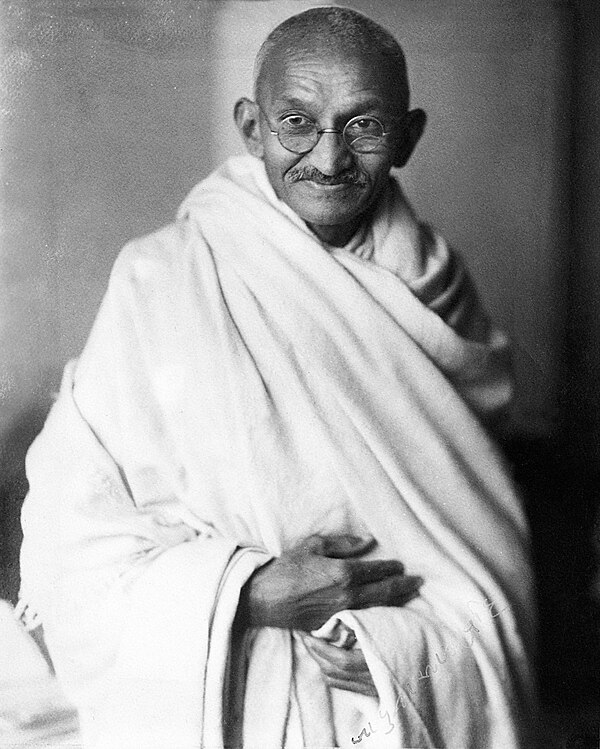
In the poignant assertion by Mahatma Gandhi, "Even if you are a minority of one, the truth is the truth," we encounter a profound declaration about the nature of truth and the courage it demands. This statement invites us to reflect on the essence of truth as an unwavering force, independent of popular opinion or societal consensus. In a world often swayed by majorities, Gandhi’s words remind us that the integrity of truth remains intact, regardless of how many stand in its defense. This notion is not merely philosophical; it is a call to action, urging individuals to uphold their convictions even when they stand alone.
Gandhi’s assertion resonates deeply in a contemporary landscape rife with misinformation and divisive narratives. The courage to embrace and advocate for one’s truth, especially when it contradicts the prevailing views, is a testament to personal integrity and moral fortitude. This courage is not born from a desire for recognition but from a profound understanding that truth, in its purest form, transcends individual perspectives. It is a reminder that each person has a role in the larger tapestry of truth, and that even a solitary voice can echo with the power of authenticity.
The image / the metaphor
At its core, Gandhi's quote evokes a vivid image of an individual standing firm amidst a tumultuous sea of opinions, embodying the essence of truth. The phrase "minority of one" conjures a sense of isolation, yet it simultaneously highlights the strength found in solitude. The choice of the word "truth" is significant; it implies an objective reality that exists independently of human perception. This imagery invites us to consider the weight of our convictions and the courage required to uphold them, even when faced with opposition.
Diving deeper into the metaphor, we can see that truth is portrayed as a steadfast lighthouse in the fog of confusion and doubt. It stands tall and unwavering, guiding those who seek it through the stormy waters of societal pressures and falsehoods. The act of standing alone in defense of truth is not merely an act of defiance; it is a profound expression of one’s inner conviction and moral clarity. In this light, Gandhi’s message becomes a rallying cry for authenticity, urging us to trust our inner compass even when the world around us seems to sway in a different direction.
In the speaker's tradition
Gandhi's philosophy is deeply rooted in the Hindu tradition, where concepts such as dharma and satya (truth) play pivotal roles. Dharma, often translated as righteousness or duty, emphasizes the importance of living in accordance with one's truth, regardless of external pressures. This alignment with truth is not merely a personal endeavor; it is a collective responsibility that echoes through the ages. In this context, Gandhi’s assertion becomes a reflection of the dharmic path, where the individual’s commitment to truth contributes to the greater good of society.
Moreover, the notion of satya is intricately linked to the idea of ahimsa, or non-violence, which Gandhi championed throughout his life. By standing firm in one’s truth, one engages in a form of non-violent resistance against falsehoods and injustices. This principle is echoed in the ancient texts of the Bhagavad Gita, where the pursuit of truth is depicted as a noble path that requires both courage and humility. In this light, Gandhi’s words resonate not only as a personal mantra but as a universal call to uphold truth as a sacred duty.
Living the teaching
In our modern lives, the teaching of standing firm in one’s truth can manifest in various scenarios. Consider a workplace where the majority may endorse unethical practices for the sake of profit. In such an environment, an individual who chooses to speak out against these practices, despite the risk of isolation or backlash, embodies Gandhi's message. This act of courage not only affirms their personal integrity but also has the potential to inspire others to reflect on their own values and choices, creating a ripple effect that can lead to meaningful change.
On a more personal level, this teaching can be applied within our relationships. Imagine a situation where one partner feels compelled to voice their feelings about a recurring issue, despite knowing that it may lead to discomfort or conflict. By choosing to express their truth, they honor their own emotional landscape and invite deeper understanding and connection. This act of vulnerability, while challenging, can ultimately strengthen the bond between partners, illustrating that truth, even when difficult, fosters authenticity and intimacy.
A reflection
As we contemplate Gandhi's powerful assertion, we are invited to reflect on our own relationship with truth. In what areas of our lives do we feel compelled to speak our truth, even if it means standing alone? This question encourages us to examine the courage we possess and the ways in which we can embody our convictions, fostering a deeper connection with ourselves and the world around us. In embracing our truth, we not only honor our own journey but also contribute to the collective pursuit of authenticity and justice.


