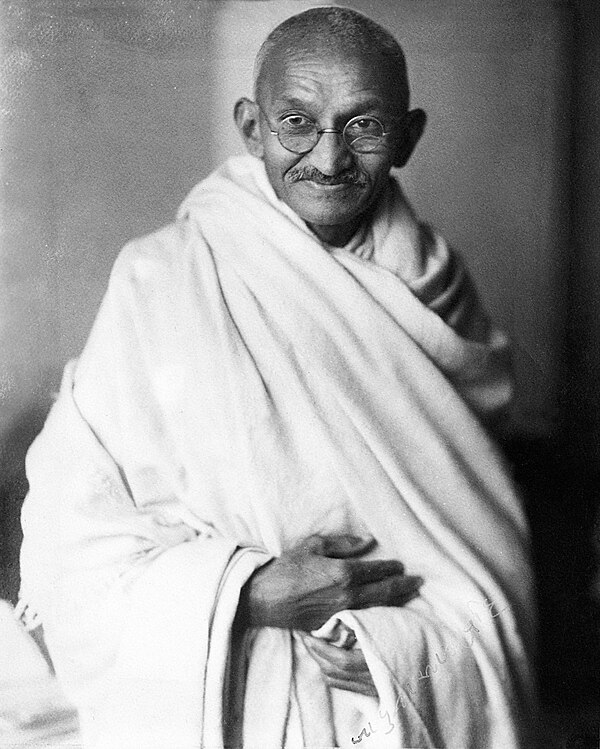
Mahatma Gandhi's poignant assertion, "I object to violence because when it appears to do good, the good is only temporary; the evil it does is permanent," invites us to reflect deeply on the nature of our actions and their consequences. In a world often quick to justify violent means for perceived noble ends, Gandhi's wisdom serves as a clarion call to reconsider our moral compass. The stakes are high; the choices we make in moments of conflict can reverberate through time, shaping not only our immediate circumstances but also the broader fabric of society.
This quote encapsulates a profound understanding of the duality of human action, particularly in the context of conflict and resolution. Gandhi's perspective urges us to look beyond the immediate gratification that violence may seem to provide, urging a deeper inquiry into the lasting impacts of our choices. As we navigate our lives, the challenge lies in discerning the fleeting nature of temporary victories against the enduring scars left by violence, both on individuals and communities.
The image / the metaphor
The imagery in Gandhi's quote is stark and evocative. The juxtaposition of "good" and "evil" highlights a moral dichotomy that is often blurred in the heat of conflict. The verbs "object" and "appear" suggest a critical stance, one that calls for discernment and awareness. Gandhi's choice of words evokes a sense of urgency, as if he is imploring us to awaken to the deeper realities of our actions. The felt sense of this quote is one of caution, a reminder that the allure of immediate results can blind us to the long-term ramifications of our choices.
In the speaker's tradition
Gandhi's philosophy of nonviolence, or ahimsa, is deeply rooted in Hindu tradition, where the concept of dharma plays a crucial role. Dharma, often translated as righteousness or duty, emphasizes the importance of ethical conduct and the interconnectedness of all beings. In this light, Gandhi's objection to violence can be seen as an expression of his commitment to uphold dharma, advocating for actions that foster harmony rather than discord. This perspective aligns with the notion of kenosis, or self-emptying, where one relinquishes personal desires for the greater good, embodying a spirit of selflessness that is essential for true peace.
Moreover, Gandhi's teachings resonate with the Buddhist concept of sunyata, or emptiness, which invites us to recognize the impermanence of all things. Just as sunyata encourages a detachment from the transient nature of existence, Gandhi's assertion challenges us to transcend the immediate allure of violent solutions. In his writings, particularly in "Hind Swaraj," Gandhi articulates the idea that true independence and freedom can only be achieved through nonviolent means, reinforcing the notion that the path to lasting good is paved with compassion and understanding.
Living the teaching
In contemporary society, the application of Gandhi's teaching can be seen in various contexts, particularly in social justice movements. For instance, activists advocating for change often face the temptation to resort to aggressive tactics when confronted with systemic injustice. However, those who embrace Gandhi's philosophy recognize that while such actions may yield short-term victories, they can also perpetuate cycles of violence and resentment. By choosing nonviolent methods—such as peaceful protests, dialogue, and community-building—these activists embody the essence of Gandhi's wisdom, striving for a more just society without inflicting lasting harm.
On a more personal level, this teaching can be applied in our relationships, especially during conflicts. When faced with disagreements, the instinct to respond with anger or aggression may seem justified, yet such reactions often lead to deeper rifts. Instead, by practicing patience and empathy, we can engage in constructive dialogue that seeks to understand rather than to conquer. This approach not only fosters healthier relationships but also aligns with Gandhi's vision of a world where love and understanding triumph over violence and division.
A reflection
As we contemplate Gandhi's profound insight, we are invited to reflect on the nature of our own actions and their consequences. How often do we find ourselves justifying harmful behaviors in the name of a greater good? In what ways can we cultivate a deeper awareness of the long-term impacts of our choices? Let us carry this question into our daily lives, seeking to embody the principles of nonviolence and compassion in all that we do.


