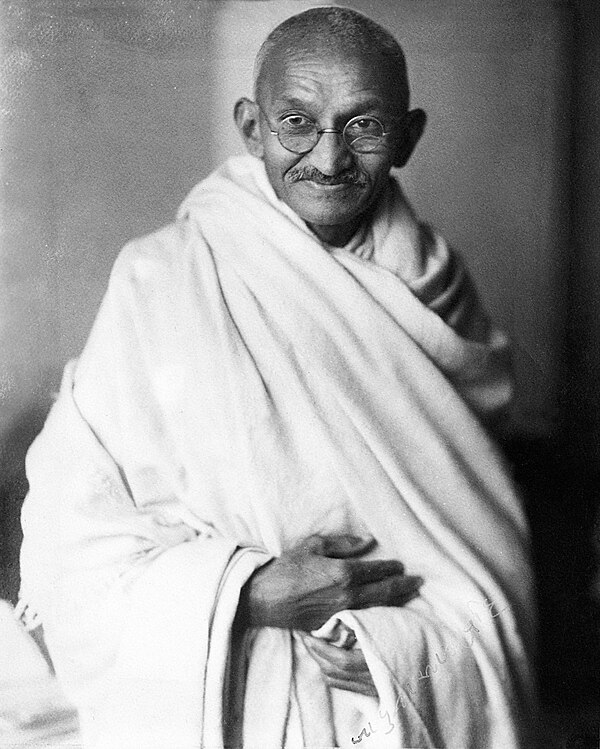
"There is no god higher than truth," Mahatma Gandhi asserts, encapsulating a profound spiritual principle that elevates truth to the highest pedestal in the hierarchy of existence. This statement challenges us to reconsider our understanding of divinity, suggesting that the essence of the divine is intrinsically linked to the pursuit and realization of truth. In a world often clouded by illusion and deceit, Gandhi's words invite us to embark on a journey that prioritizes authenticity and integrity above all else, illuminating the path toward a more meaningful existence.
Gandhi's declaration resonates deeply within the fabric of human experience, urging us to confront the complexities of our own truths. It compels us to reflect on the nature of our beliefs, values, and actions, and to recognize that the pursuit of truth is not merely an intellectual exercise but a spiritual quest. In this light, truth becomes not just a concept but a living force that guides our decisions and shapes our relationships, reminding us of our interconnectedness and shared humanity.
The image / the metaphor
The imagery in Gandhi's quote is striking in its simplicity yet profound in its implications. By stating that there is "no god higher than truth," he positions truth as the ultimate authority, a divine principle that transcends all other forms of worship or belief. The verb "is" suggests an unchanging reality, a fundamental essence that exists independently of human perception. This evokes a sense of reverence for truth, as if it were a sacred entity that demands our utmost respect and devotion.
In the speaker's tradition
Gandhi's assertion finds its roots in the rich tapestry of Hindu philosophy, where truth (satya) is revered as a fundamental aspect of dharma, or righteous living. In this tradition, truth is not merely a moral guideline but a spiritual imperative that aligns the individual with the cosmic order. Concepts such as kenosis, the self-emptying of one's ego, and prajna, or wisdom, further illuminate the path toward understanding and embodying truth. In this context, Gandhi's words resonate as a call to align one's life with the deeper truths of existence, transcending the superficial layers of societal norms and expectations.
Moreover, the Bhagavad Gita, a seminal text in Hindu philosophy, emphasizes the importance of truth in the pursuit of self-realization. In Chapter 2, Krishna advises Arjuna to act in accordance with his true nature, suggesting that the essence of one's being is intertwined with the pursuit of truth. This alignment with truth is not only a personal journey but a collective responsibility, urging individuals to contribute to the greater good of society through their honest actions and intentions.
Living the teaching
In our modern lives, the teaching of Gandhi's quote can manifest in various scenarios, particularly in the realm of personal integrity. Consider a workplace environment where honesty is often compromised for the sake of expediency. An employee may face the dilemma of reporting unethical practices, knowing that doing so could jeopardize their position. In this moment, Gandhi's teaching serves as a guiding principle, encouraging the individual to prioritize truth over personal gain, ultimately fostering a culture of accountability and trust within the organization.
Similarly, in our interpersonal relationships, the pursuit of truth can lead to deeper connections and understanding. Imagine a situation where a friend is struggling with a personal issue but is hesitant to share their feelings. By creating a safe space for open dialogue and encouraging honesty, we embody Gandhi's teaching, allowing truth to flourish in our interactions. This commitment to authenticity not only strengthens our relationships but also cultivates an environment where vulnerability is embraced, paving the way for healing and growth.
A reflection
As we contemplate Gandhi's profound assertion, we are invited to reflect on our own relationship with truth. What truths are we avoiding in our lives, and how might embracing them transform our experiences? In this moment of introspection, we can ask ourselves: How can I align my actions more closely with my understanding of truth, and what steps can I take to embody this principle in my daily life?


